
9.5% policy rate "not reasonable", should come down to 7%: Titumir
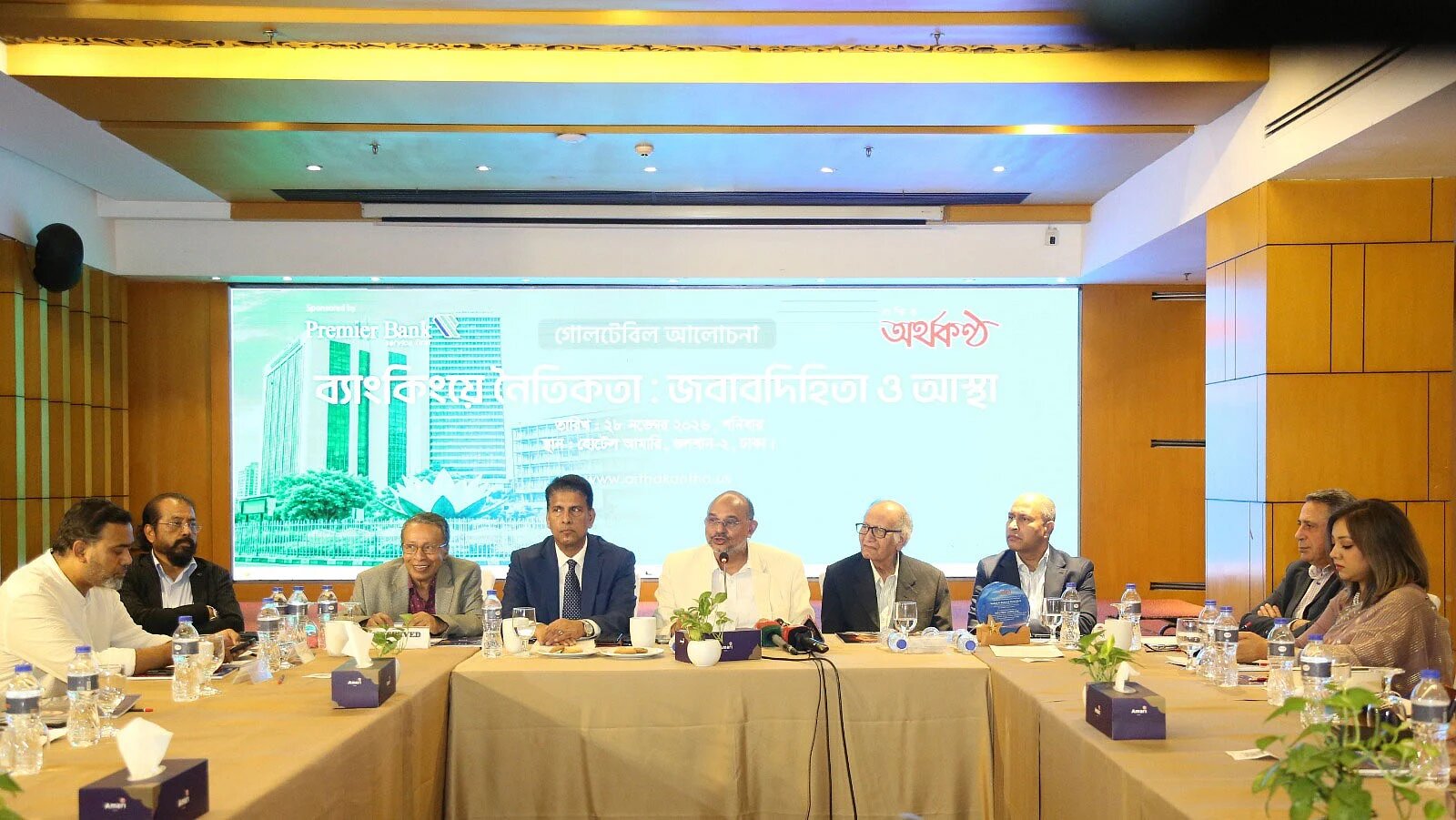
Rashed Al Mahmood Titumir, adviser to the prime minister on finance and planning, has said the government does not consider Bangladesh Bank's current 9.5% policy rate reasonable. "The rate needs to be brought down to 7%," he said. He added that the government does not want to interfere with the central bank's independence, and for that reason it is giving the Bangladesh Bank monetary policy committee no directive on the issue. Instead, it is trying to bring rates down by coordinating fiscal and monetary policy.
He made the remarks on Saturday at a roundtable titled "Ethics in Banking: Accountability and Trust", organised by Arthokantha at a hotel in the capital.
Asked whether interest rates can be lower than inflation, the adviser cited Japan, where inflation is 3% but the interest rate is 1%.
He said the government is trying to lower lending rates in the interest of investment. To that end, it has taken steps to provide support from a Tk 39,000 crore fund and from government revenue. The government continues to call for lower interest rates.
Outlining the government's plan to revive the banking sector, Titumir said asset quality reviews (AQRs) of weak banks are under way as part of a four-year programme. The government expects significant progress in reducing non-performing loans by December this year.
Claiming that public confidence in the banking sector has already begun to return, he said depositors are regaining trust in Samabesh Islami Bank, and the bank's deposits have grown. Complaints are no longer heard as before. Likewise, visible improvement in non-performing loans, capital positions and private-sector credit will be seen across the banking sector within the next year.
Titumir said the government has to spend a huge amount to rescue weak banks. Even so, there is some good news, he said: some countries and foreign parties that were pushed away in the past are showing interest again. Saudi Arabia, for example, is now showing interest. He also said a separate department has been set up at Bangladesh Bank to properly supervise the operations of Islamic banks.
The keynote paper at the roundtable was presented by Mustafa K Mujeri, executive director of the Institute for Inclusive Finance and Development (InM). He said political influence and personal connections have at times played a role in loan approvals, weakening institutional discipline.
Mohammad Muslim Chowdhury, former chairman of Sonali Bank, said the current figure of 33% non-performing loans in the banking sector includes money that has been siphoned abroad, which was never invested in any genuine project. He therefore suggested splitting defaulted loans into two categories: genuine defaulted loans and laundered money. Separate statistics for the two should be published, he said.
Other speakers included Arifur Rahman, chairman of Premier Bank; Prof Prashanta Kumar Banerjee of the Bangladesh Institute of Bank Management (BIBM); Shamsul Haque Zahid, editor of The Financial Express; and Md Mehedi Hasan, senior reporter at The Daily Star. Nahidul Khan, adviser editor of Arthokantha, chaired the event.
🌐 This English version was automatically translated from the original Bangla.