Exporters fear the impact of new US tariff proposal
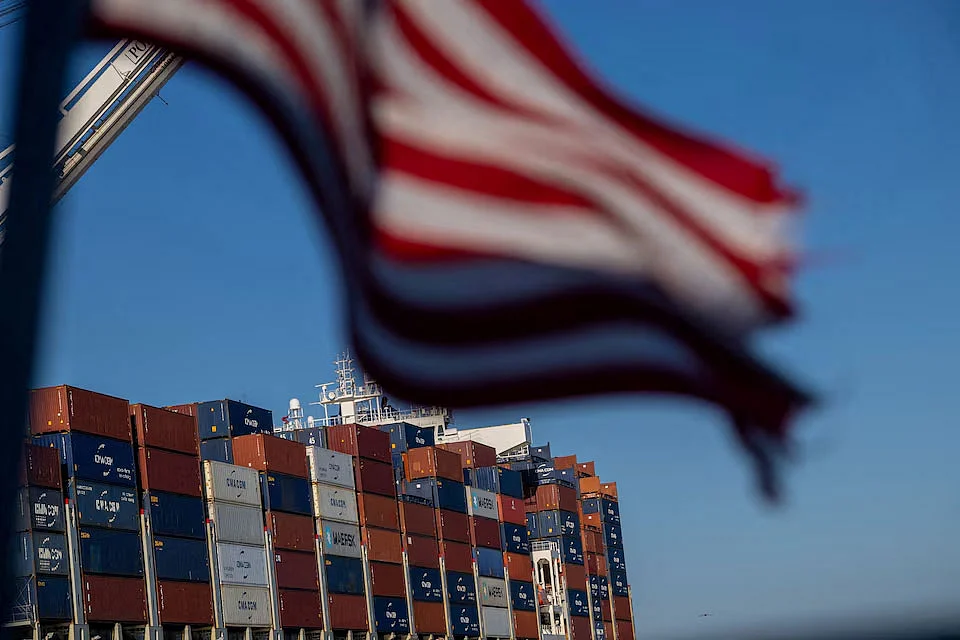
Exporters are once again worried about the United States, the single largest market for Bangladeshi goods, because the Trump administration wants to impose fresh tariffs on imports. It alleges that Bangladesh's excess industrial production capacity is hampering US trade. As a result, the Office of the United States Trade Representative (USTR) wants to impose an additional tariff of up to 18 per cent on Bangladeshi goods.
On Wednesday night the USTR published its investigation report on excess industrial production capacity covering 14 countries and blocs, including Bangladesh. The office began the investigation in March, looking at Bangladesh's garment, leather and cement sectors. Besides Bangladesh, the USTR has proposed new tariffs on China, India, the European Union (EU), Singapore, Switzerland, Indonesia, Malaysia, Cambodia, Thailand, South Korea, Vietnam, Taiwan and Japan.
The news agency Reuters reported that the USTR's proposal will take effect only after a hearing and other formalities. The tariff will not come into force before the hearing on January 25.
Including the 10 per cent imposed in July, the average tariff on Bangladeshi goods exported to the US is currently 25 per cent (the US import duty). If a new 18 per cent tariff is imposed, the total average tariff will stand at 33 per cent.
US economy is paying a price for Bangladesh's excess industrial capacity
Earlier, in July, the USTR imposed a 10 per cent tariff on Bangladeshi goods, alleging that Bangladesh had not properly enforced the ban on goods made with forced labour. At that time, tariffs of 10 and 12.5 per cent were also imposed on 60 countries, including India, Vietnam, Indonesia, Cambodia and Pakistan. These tariffs were imposed under Section 301 of the Trade Act of 1974.
Including the 10 per cent imposed in July, the average tariff on Bangladeshi goods exported to the US is currently 25 per cent (the US import duty). If a new 18 per cent tariff is imposed, the total average tariff will stand at 33 per cent. That is because, under the US Section 301 tariff proposal, Section 301 tariffs already in force will be excluded from the calculation of this 18 per cent. In other words, the total new additional tariff, including the 10 per cent imposed last July, will be 18 per cent.
Several exporters in the country said that if the new tariff is imposed, prices of goods in the US market will rise. That will reduce consumers' purchasing power and, in turn, orders will fall. US importers could also pressure producers to share the burden of the tariff. That is what happened after the reciprocal tariffs took effect last year.
Bangladesh does not sell any product abroad at abnormally low prices (dumping) in a way that hurts local producers in other countries. Bangladesh simply does not have that capacity.
Khandaker Abdul Muktadir, Commerce Minister
New US tariff on Bangladesh could be up to 18%
Asked about this, Commerce Minister Khandaker Abdul Muktadir told Prothom Alo on Thursday that under Section 301 of US trade law, the USTR can investigate and take action if it considers another country's trade policies, laws or practices unfair, discriminatory or a burden on US trade. It has done exactly that this time to various countries, including Bangladesh. There is not much to be worried about, he said. Bangladesh exported to the US on Thursday at the same tariff it paid on Wednesday.
The commerce minister stressed that Bangladesh does not sell any product abroad at abnormally low prices (dumping) in a way that hurts local producers in other countries. Bangladesh simply does not have that capacity.
Supporting the minister, a Bangladeshi exporter explained the point to Prothom Alo: 'Suppose a shirt costs $10 at home but is sold for $7 in the US market. In that case the US could allege that Bangladesh is harming it through dumping. But Bangladesh is not doing that.'
The USTR report says Bangladesh's export-oriented manufacturing sector benefits, directly or indirectly, from various measures, policies and practices. For production, Bangladesh imports large quantities of machinery, yarn, fabric and synthetic fibre. A large share of these comes from China, India and other countries. Yet the US also has ample capacity to produce and export these goods. Because of Bangladesh, US companies' opportunities to export their products have shrunk. This is hurting their income, profits and employment, and the effects are being felt in particular industrial sectors, regions and even the economy as a whole.
The relief is that every tariff move the Trump administration has made so far has been struck down. The hearing on the USTR's latest recommendation will be held in late January. So the government still has two months to lobby.
Mahmud Hasan Khan, president of the BGMEA
14 countries including Bangladesh face new tariffs
Worry over garment exports
The USTR report says US imports of garments from Bangladesh were about $8.6 billion in 2025. That year, Bangladeshi garments accounted for about 8 per cent of total US imports of such goods.
The report notes that although Bangladesh's overall trade ran a deficit of $15 billion to $32 billion over 2021–25, Bangladesh had a surplus in goods trade with the United States. It says this surplus grew from $5.9 billion in 2021 to about $7 billion in 2025.
Mahmud Hasan Khan, president of the garment owners' association BGMEA, told Prothom Alo: 'We are not too worried about this, because buyers pay 95 to 96 per cent of the tariff. And competing countries' tariff rates are higher than ours.' He added: 'The relief is that every tariff move the Trump administration has made so far has been struck down. The hearing on the USTR's latest recommendation will be held in late January. So the government still has two months to lobby.'
Some in the garment industry, however, are concerned about the US proposal. Fazlee Shamim Ehsan, executive president of the knitwear manufacturers' association BKMEA, told Prothom Alo: 'If the additional tariff takes effect, it will ultimately fall on US buyers. Their purchasing power will fall. That could reduce our orders. This is what happened last year after the US imposed reciprocal tariffs.' He added: 'Among competing countries, there is no proposal to impose this tariff on Pakistan. So there will be a risk that some of our orders shift to Pakistan.'
The tariff decision will be finalised next January. Before that, the US administration must be persuaded that the benefits Bangladesh gives its industrial sector, such as taxes and cash support, are actually meant to protect Bangladeshi industrial entrepreneurs and to keep the domestic economy buoyant. Such benefits are not meant to secure market access or export capacity for any particular country.
M Masrur Reaz, chairman of Policy Exchange Bangladesh
Advice on negotiating
M Masrur Reaz, chairman of the private research organisation Policy Exchange Bangladesh, believes Bangladesh should negotiate urgently so that the additional US tariff is not imposed. He told Prothom Alo that the tariff decision will be finalised next January. Before that, the US administration must be persuaded that the benefits Bangladesh gives its industrial sector, such as taxes and cash support, are actually meant to protect Bangladeshi industrial entrepreneurs and to keep the domestic economy buoyant. Such benefits are not meant to secure market access or export capacity for any particular country.
What risks is US tariff policy creating for Bangladesh's economy
🌐 This English version was automatically translated from the original Bangla.