
How stay order relief may weaken banks' loan recovery safeguards
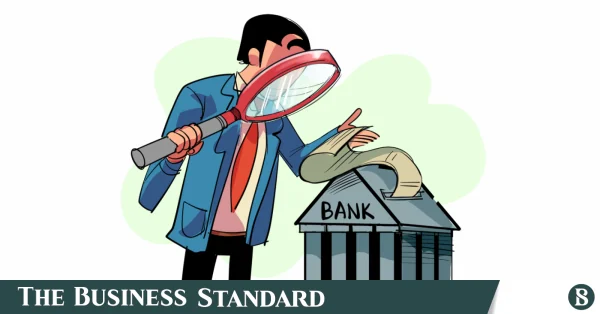
A new Bangladesh Bank circular allowing borrowers with court stay orders over loan classification disputes to access stimulus financing could throw a lifeline to struggling factories, but bankers and economists warn the blanket relaxation risks eroding credit discipline and weakening lenders' recovery leverage.
Issued on 19 November, the directive permits disputed borrowers to tap into the central bank's Tk60,000 crore economic recovery schemes, spanning 15 stimulus funds aimed at protecting jobs and reviving industrial activity, provided they hold court stay orders suspending loan-related proceedings.
The policy shift comes as default loans tied up in court stay orders surged 80% year-on-year to Tk1.82 lakh crore at the end of 2025, according to BB's Financial Stability Report 2025. Stay-order cases have nearly quadrupled since 2022, jumping from 226 to 845, putting severe strain on bank liquidity and earnings.
The case for revival: breaking regulatory bottlenecks
Supporters of the move argue the central bank is responding to extraordinary post-crisis realities. Following widespread financial irregularities under the previous Sheikh Hasina administration, several otherwise viable businesses were left cash-strapped and entangled in classification disputes.
The move also raises ethical questions, as Bangladesh Bank has introduced a provision that was not even used under the previous regime, potentially undermining banking discipline.
Syed Mahbubur Rahman, managing director of Mutual Trust Bank, noted that some large borrowers face genuine operational distress. "For instance, we are trying to reopen some closed factories. When we submitted applications, they were rejected because there was a stay order," he told The Business Standard.
"Perhaps the provision was introduced to help two or three groups or borrowers who have fallen into difficulties. But we have institutionalised the use of stay orders in such a way that even when they are used for legitimate reasons, the negative aspects receive greater attention," he said, adding that the move inevitably raised ethical and moral questions.
Why BB allowed defaulters to take fresh loans
The provision was intended partly to help large business groups facing genuine difficulties, a banker said, requesting anonymity. Citing City Group and GPH Group, he said some banks are willing to extend credit facilities but could not do so because of legal barriers.
The problem is particularly acute for banks dealing with large business groups whose loans are spread across multiple lenders.
Referring to negotiations involving City Group, the banker said lenders had adopted different approaches to recovering their exposure. Some had rescheduled loans, while others, including his bank, had pursued litigation to push the group towards an agreement involving asset sales and repayment of outstanding liabilities.
His bank wanted the group to sell assets over three to four years rather than seek a 15-year repayment arrangement, he said.
Borrowers with substantial personal and corporate assets should demonstrate their willingness to repay by selling assets instead of relying solely on long-term rescheduling, he argued.
Some other lenders, meanwhile, had agreed to provide the group with additional financing of around Tk3,000 crore as part of their restructuring arrangements. While respecting their decisions, he said his bank's priority remained recovering its outstanding loans.
He also cited GPH Group as presenting an even more challenging recovery situation.
The banker pointed to Bengal Plastic as another example of a business his bank wanted to support despite complications arising from a stay order involving another company.
According to him, the borrower had agreed to provide additional collateral and sell a hotel property to repay its outstanding liabilities. The bank was willing to extend additional letters of credit and fresh financing, but a classification-related stay order involving another company had complicated the process.
His bank had also approached Bangladesh Bank seeking special permission to finance such businesses, he said. However, individual applications can take months to process because of inspection and approval requirements.
"Bangladesh Bank may say it will inspect the factory the following week, but preparing the inspection report and completing the process can take six months. The factory could be operational tomorrow morning if permission is granted," he said.
The circular could therefore help hundreds of smaller businesses that lack the bargaining power and regulatory access enjoyed by large corporate groups.
He cited Bengal Plastic, whose exposure he estimated at around Tk300 crore, saying there could be hundreds of other companies facing similar difficulties.
He also questioned whether a blanket relaxation was the right approach, arguing that Bangladesh Bank already had the authority to consider exceptional cases individually.
Economists warn of a 'litigation ecosystem'
Economists warn that institutionalising stay orders as a gateway to cheap credit sets a dangerous precedent, one that even the previous regime avoided.
Zahid Hussain, former lead economist at the World Bank's Dhaka office, described the circular as yet another regulatory accommodation at a time when non-performing loans are mounting and recovery tools remain weak.
"A borrower owing Tk1,000 crore or Tk1,500 crore could potentially obtain a stay order and regain access to financing, reducing the incentive to repay outstanding loans," Hussain said. He warned that compliant borrowers could become demoralised watching defaulters secure fresh funds, while businesses may increasingly rely on lawyers and auditors to game regulatory concessions rather than restore genuine repayment capacity.
Enforcement remains the acid test
Ultimately, bankers say, the circular's impact hinges on execution. Without strict ring-fencing and close monitoring by the central bank, lenders warn that rehabilitation funds risk being diverted – turning a well-intentioned industrial lifeline into an escape hatch from existing liabilities.