
Jute export to 30 countries from tin business
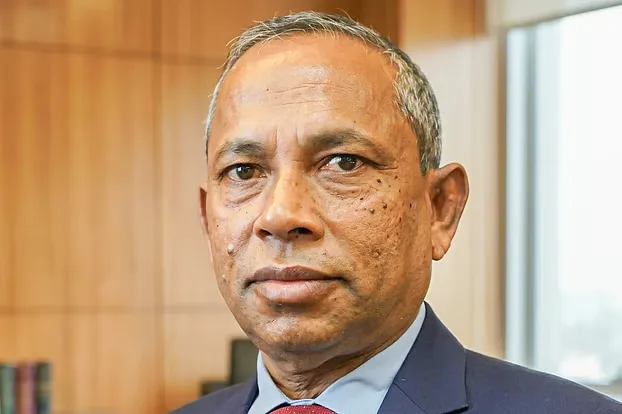
A jute mill inspired by mother is making world class hydro-carbon free bags. Annual income is more than Tk 200 crore in foreign exchange. The rural economy of North Bengal is booming.
Once upon a time, a businessman used to sell tin in a common shop in a corner of Syedpur railway market. Capital meant only honesty and hard work and mother's inspiration. But his dream was sky high. Today, that common businessman has brought the magical touch of modernity to the Miriaman jute industry of North Bengal, established 'Ranu Agro Industries Limited'.
When the existence of jute is endangered due to the influence of plastic in the global market, the export of eco-friendly and 100% biodegradable jute products produced in Syedpur started by the hand of entrepreneur Sushil Kumar Das. Now it is being exported to about 30 countries of the world including Japan, Netherlands, South Korea. It is now a unique institution in the country's industrial sector, bringing smiles to the faces of thousands of loss-making farmers and creating employment for around seven thousand people. With the efforts of this entrepreneur, a successful world-conquering jute business has developed from that small tin shop in Railbazar.
The history of 'golden fiber' jute with the economy and culture of Bangladesh is hundreds of years old. Once upon a time this jute was the main driving force of this country's foreign exchange earning. And North Bengal has an inseparable relationship with this golden past of jute. Jute of excellent quality has been produced since time immemorial in the fertile alluvial soil of Teesta and Brahmaputra in North Bengal. However, due to the inadequacy of the communication system, the farmers of this region were once deprived of the fair price of their jute produce.
The scene changed dramatically in 1870, when the British government established the country's largest railway factory and the Assam-Bengal Railway at Saidpur in Nilphamari. This railway network from Syedpur connects the agricultural products of North Bengal, especially jute, with the major jute mills of Kolkata and international ports. The northern jute was pressed into the railway carriage and reached the world market quickly and easily. As a result, Saidpur became a huge and bustling commercial center of jute.
In the course of time, when the traditional silk industry of Bangladesh was cornered by the invasion of artificial fibers (plastic and polyethylene) in the world market, a new modernization story of silk industry has started again from the ancient railway town of Syedpur in the north. The hero of this story is Sushil Kumar Das, a tin merchant of Syedpur Railway Bazar. Who, with his talent, tireless labor and foresight, emerged from the tin business and built a huge jute mill named Ranu Agrosi Industries Limited, which today is spreading the lost glory of Bangladesh across the country and abroad.
Mother's Dream and Ranu Agro's Journey
Syedpur Railway Bazaar is forever famous for its 24-hour activity. Sushil Kumar Das started his business life with a simple tin shop in that railway market. But his dream was to do something bigger. His mother Ranu was the biggest inspiration in building this dream. After that, Sushil Kumar Shyamoli City Group and Ranu Agro Industries Limited were formed with his wife Shyamoli Rani Das. Shyamoli was the founding chairman of this institution. Now he is deceased.
He had a deep dream to make the backward and underprivileged people of the society self-reliant by creating employment for them. Ranu Agro Industries Limited started its journey in 2010 in the Kala Bagan area of Kamarpukur Union of Syedpur by the hand of Sushil Kumar Das with the aim of realizing the dream of the mother and bringing the potential of the jute produced by the northern farmers to the world.
The beginning was not easy. But Sushil Kumar Das laid utmost emphasis on product quality and modern management. A touch of modernity comes to the production system of the factory with relentless efforts. The first major recognition of this modernization came in 2013. He was able to earn 50 thousand dollars in foreign exchange that year.
Exports and economic success in global marketsThere was no looking back for Ranu Agro after that. The demand for versatile and quality products made of jute is increasing rapidly in the global market. Currently, jute products produced in this factory in Syedpur are being directly exported to about 30 countries including Japan, Belgium, Netherlands, South Korea, Indonesia, India, Turkey, Uganda, Tanzania, Nigeria, Gambia, Ghana.
The export graph is also quite upward every year. In 2019, products worth crores of rupees were exported to 12 countries. It has continuously increased to reach Tk 200 crore in 2025. The company has already bagged the Best Exporter Award in recognition of its outstanding contribution to jute exports.
100% environment friendly and modern technologyRanu Agro's products include a variety of standard and food-grade bags, such as Binola Twill, Light Sis, A/B/L Twill and Double Warp (DW) bags.Storage and Durability: These bags are 100% biodegradable and can carry a weight of around 100 kg.Security Technology: These are ideal for safe packaging of agricultural products like cereals, coffee, cocoa, rice and wheat in accordance with international standards. They are manufactured in a completely hydro-carbon free manner for maximum protection of food products.Advanced Stitching: Made with hemmed mouth and overhead dry stitch technology, these sturdy sacks are much safer and cost effective than artificial or synthetic packaging. Nowadays they are available in various attractive colors and designs.Expansion of Shyamoli City GroupThough successful in this modernization of jute industry, Sushil Kumar Das did not forget his old tin business roots. Rather, using the success of the jute market, he set up a new factory named Shyamoli Cement Sheet Mills Limited with a new innovative idea. Here eco-friendly colored concrete is being produced by mixing cement and other materials. Being affordable and durable, this colorful wool is now widely exported to India beyond the domestic market, adding foreign exchange to the local economy and creating employment opportunities for thousands of unemployed people.
Apart from Ranu Agrosi Industries Limited, four other companies under the Shyamoli City Group are making important contributions to the industrial and commercial sectors of the country—Shyamoli Cement Sheet Mills, Shyamoli Roofing Sheets, City Ispat and M/s City Traders. Since 1988, CI has been working as one of the largest and most reliable distributors of construction materials including sheet, cement sheet, nationwide.
Sushil Kumar Das's vision of the future is far-reaching. But he feels that government policy support is necessary for the full development of this industry.
Sushil Kumar Das, managing director of Ranu Agro, told Prothom Alo, "If the government ensures uninterrupted power supply to the industries, the production of the factories will increase many times over the present." Along with this, if the Bangladesh embassies and high commissions located abroad support entrepreneurs in creating new markets for domestic products, then the export of jute products can be increased at least 10 times. If new markets are created, industry will expand, unemployment will decrease and if people have money in their hands, the wheels of the country's economy will turn faster.
The golden fiber trade that once enriched the city with the sound of the whistle of the Syedpur Railway factory, today has ushered in a new era with the sound of modern machinery of Ranu Agro. This story of rising from a small tin shop in Railbazar to lead the modern silk industry proves that Bangladeshi silk industry is still capable of conquering the world if the right initiative, integrity, talent and modernization are combined. Institutions like Ranu Agro will create a strong position in the global market if they get joint public-private sponsorship.
🌐 This English version was automatically translated from the original Bangla.