
Many websites around the world are closed due to fear of cyber attacks, Bangladesh Bank website is closed to avoid attacks
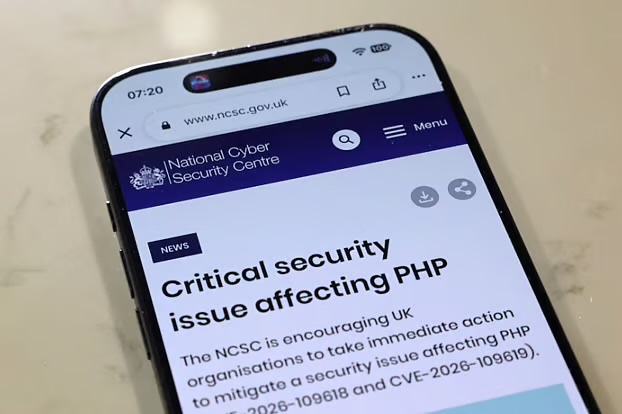
Various government agencies and commercial organizations around the world have temporarily shut down their websites to avoid the risk of cyber attacks. The warning comes after two serious security flaws were discovered in PHP, a programming language widely used to create and manage websites. Experts warn that using these flaws as an opportunity, cyber attackers can gain access to the server without any password.
Last Wednesday, the developers of the PHP project released an update to fix the bug. Users are advised to install that update immediately. PHP is used in many popular web design platforms. As a result, various types of websites including online marketplaces, media, government services may be at risk due to this security flaw.

Cyber security firm Wiz also identified these flaws. According to the company, around 70 percent of the world's websites use PHP. According to Wiz, this is one of the most serious security flaws ever discovered in PHP. It can even be called one of the weaknesses in the history of software.
The US National Security Agency (NSA) has advised relevant organizations to update their security quickly. They advised disconnecting the internet on vulnerable systems if an immediate update is not possible.
In a statement on the social media X (formerly Twitter), the NSA said that by exploiting these flaws, attackers could directly gain access to server files or databases. Besides, attackers can take full control of the server by taking advantage of these vulnerabilities without any password.
PHP Foundation's security engineer Volker Dusch told the Wall Street Journal that PHP is facing its most serious security problem in more than a decade. He compared it to the much-discussed 'heartbleed' error of 2014. At that time too there was a worldwide rush to update software.
Cyber security firm Calif found these flaws using OpenAI's GPT-5.6 Sol model last August. They identified this during a code review of PHP funded by OpenAI.
Wiz, a cyber security company owned by Google, said that after a few weeks they also identified these errors on their own initiative. In this work, they took the help of Google's 'Gemini 4 Argon' and 'GPT-5.6 Sol' models.
In OpenAI X, they consider this to be one of the biggest security flaws of recent times. The company says that a new step in technology has been revealed through this. AI is now able to spot major flaws that can affect the entire Internet.
The developers of the PHP project released an update on Wednesday to fix the bug. The PHP Foundation, the organization that funds PHP developers, said in a blog post, "If you use PHP, it's important to update now."
France's interior ministry said local administration websites had been shut down since Wednesday afternoon at the request of the country's national cyber security agency. This includes the Paris Police website.
The Netherlands' national broadcaster NOS said the country's digital identity verification service 'DGD', the website of the House of Representatives and the website of the National Cyber Security Center were taken offline as a precautionary measure.
Belgium's Ministry of Foreign Affairs has temporarily shut down its website as part of a precautionary measure, X said. However, the country's National Cyber Security Center said no attack on any Belgian website had been recorded so far.
Australia's national broadcaster ABC reported that websites affected by the PHP flaw included the Australian Signals Directorate's own website, cyber.gov.au.
After serious security flaws were discovered in PHP, the widely used programming language for creating and managing websites, governments and various companies around the world are quickly trying to fix them. On the other hand, a cyber security company reported that millions of cyber attacks have been attempted since the flaw was revealed.
Earlier on Wednesday, the governments of various countries including Europe closed many websites as a precautionary measure. At the same time website operators try to fix PHP errors.
In this situation, the temporary closure of banks, airlines, railways, taxes and various government services from Tokyo to Helsinki shows how widely PHP is used in public and private systems. It also becomes clear how difficult it is to fix such errors quickly after they become public.
"It's been a long day and night for everyone in the IT and security sector — I know that," Microsoft CEO Satya Nadella said at an event in Cologne, Germany, Thursday. I have not seen anything like this for a long time. He said, this incident has again highlighted the importance of creating a digital system that can be maintained while maintaining security.
Bugs in PHP have been identified for years using artificial intelligence or AI. Then on Wednesday, PHP's makers released an emergency fix and asked users to update the software quickly.
Madeleine Lawrence, co-founder of Belgium-based cyber security firm Aikido Security, said details of the flaws came to light before the fix was ready. Attacks are being attempted since then. That's why organizations are now racing to update systems before attackers, he said. That's the competition now.
While governments and companies in various countries are fixing bugs and shutting down websites as a precautionary measure, there have been millions of hacking attempts, according to cloud service firm Cloudflare. Matthew Prince, chief executive of the organization, wrote on social media X on Wednesday night, "In the 10 hours before the bug became public, we saw thousands of attempts to exploit it on our network." Within two hours it was several lakhs, and now the number has crossed lakhs.
Japan to Finland
Several Japanese companies said today that they have temporarily suspended some online services as part of emergency measures. Among these institutions are brokerage firm Nomura, lender Mitsubishi UFJ Financial Group, airline ANA and East Japan Railway. Insurance company Tokyo Marine Holdings said it has shut down the website of one of its subsidiaries.
Japan's Ministry of Finance and Meteorological Agency temporarily shut down some online services to take security measures. The country's national tax agency also temporarily suspended its online services.
The precautionary measures signal growing concerns about cyber security in Japan. According to data from TrendAI, there were more cyber attacks in Japan in the first nine months of this year than in the whole of last year.
French telecommunications company Orange said that as a precautionary measure, they have temporarily blocked access to the PHP-based websites and apps of some subsidiaries.

Tencent Cloud, one of China's largest cloud service providers, has asked customers to install an updated version of PHP. However, they did not suggest a massive shutdown of the website.
Valtori, a Finnish government IT service provider, says it has deployed PHP security patches overnight. After shutting down the government web services a day ago, the temporary restrictions on them are being gradually lifted.
Valtori CEO Hannu Naumannen said in a statement that it could take days, or even weeks, for services to resume. Systems should be carefully checked for updates as well.
Several Asian governments have ordered cyber security tests to address the PHP flaw. China's Ministry of Industry has asked organizations and users to quickly check their systems and install the latest secure version of PHP. The ministry has also suggested strengthening cyber security monitoring and changing accounts, passwords and security passwords as needed.
South Korea has raised the level of private sector cyber security precautions and launched an emergency response system amid concerns that the risk of hacking may increase.
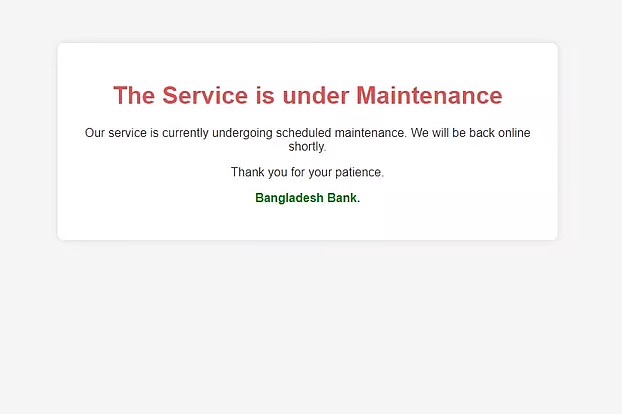
Bangladesh Bank's official website has been closed due to cyber attack. However, internet banking and mobile banking transactions are normal. As a result, customers are not facing any problem in their transactions.
Regarding this, Bangladesh Bank spokesperson Arif Hossain Khan told Prothom Alo on Thursday night that the website is being checked whether there is any error or not. This decision has been taken due to the fear of global attacks. It does not cause any problem in customer transactions.
Nowadays, Internet and software are very important for managing government services, banking, e-commerce, media and various online platforms. A large part of these websites are dependent on PHP programming language. Recently two critical security flaws in PHP have raised global cyber security concerns.
As reported by BBC and Reuters, governments of various countries have taken emergency measures after two serious security flaws were detected in PHP, a programming language widely used in creating and managing websites. Governments and commercial organizations around the world have shut down their websites since Wednesday night after news of the bug surfaced. Still, millions of hacking attempts are reported.
A researcher using artificial intelligence (AI) has found two very dangerous flaws in a programming language called PHP. About 70 percent of the world's websites use this programming language.
The BBC's cyber correspondent Joe Tidy said it was an "unprecedented situation" where one website after another went offline as IT teams scrambled to protect their organizations from the risk of a potentially deadly cyber attack.
For example, the website of Edinburgh Council, the 'Doctor Who' section of the BBC website and the websites of various companies in Japan, Belgium and the Netherlands have been taken offline. Even some cyber security authorities' own websites have been shut down. Although they were trying to warn people about its importance.
For this, Bangladesh Bank has closed the website as an additional precaution to avoid the possible risk of global cyber attacks.
🌐 This English version was automatically translated from the original Bangla.