
Primitek enters plastic household goods market, targets Tk150cr monthly sales
Highlights:
- Primitek launches $3.5 million factory in Mirsarai economic zone
- Facility targets Tk150 crore monthly sales and 5,000 jobs
- Production includes plastic, polymer and PVC products, with export plans
- Factory targets 8,000 tonnes monthly production at full capacity
- Gas shortages force diesel use, increasing production costs
- Company seeks lower raw material costs and better worker facilities
Primitek Industries Limited has started commercial production at its 30-acre factory in the National Special Economic Zone (NSEZ) in Mirsarai, investing $3.5 million in a facility targeting monthly sales of Tk150 crore and employment for 5,000 people at full capacity.
The factory began operations last week, producing plastic, polymer and PVC products for the domestic market, with plans to expand into exports.
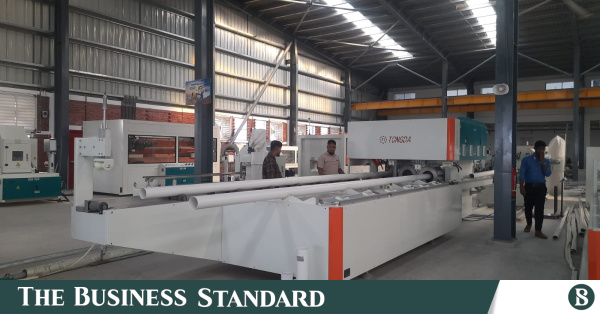
During a visit to the facility, automated production lines were seen manufacturing plastic chairs and pipes, with resin fed into machines and finished products emerging at the other end. Most of the production process is automated, while workers handle and arrange finished goods.
Managing Director MA Quieum said the factory currently employs around 1,000 people, with plans to recruit another 2,500 in 2027. Once fully operational, it is expected to generate direct and indirect employment for around 5,000 people.
The factory currently produces plastic chairs and pipes, PVC sheets and SPC flooring. Its planned product range includes thousands of household, furniture and construction items, including mugs, jugs, buckets, food containers, tables, sofas, wardrobes, shoe racks and kitchen racks.
According to the company, the facility will have the capacity to produce around 8,000 tonnes of plastic products a month at full capacity. It plans to formally launch nationwide distribution through an event in December.
The factory has been designed as a green facility, with the company pursuing Leadership in Energy and Environmental Design (LEED) certification. It has provisions for recycling rejected plastic materials and harvesting rainwater for industrial use.
Primitek Industries Ltd, a concern of Primitek Group, has no visible electrical wiring. Instead, it uses a busbar trunking system, which distributes electricity through copper or aluminium busbars housed in protective enclosures and reduces the risk of short circuits.
However, gas shortages are hampering production expansion, Quieum said. Despite applying for a gas connection around 18 months ago, the company has yet to receive one.
While the factory has electricity, some products require gas during manufacturing. The company is therefore using diesel as an alternative, raising production costs.
Quieum also called for customs valuation of imported raw materials to be aligned with international market prices to help local manufacturers remain competitive.
He said additional customs valuation raises raw material costs, pushing up finished-product prices and weakening export competitiveness.
He also highlighted inadequate worker housing, healthcare, educational institutions and essential retail facilities in the economic zone. The company has to recruit workers from distant areas and arrange transport to bring them to and from the factory.
Saleh Ahmed, member, Invest Bangladesh Authority, told TBS that the gas supply issue has been conveyed to the relevant authorities.
He also added that there are plans to arrange accommodation facilities for workers.