
Starting with 10 duck eggs, Bibi Rahima now owns a 16 acre farm
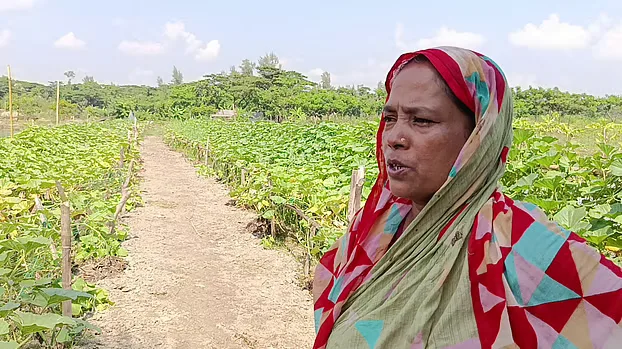
Bibi Rahima collected 10 duck eggs from a neighbor and placed them under the native chicken in her house for hatching. All the eggs hatched. Then Rahima started rearing these ducklings. Start from there. Now Bibi Rahim has an integrated agricultural farm of about 16 acres.
Bibi Rahima is a resident of Darbeshpur village in Kadirhanif union of Noakhali Sadar upazila. His integrated agricultural farm was developed by leasing land from various individuals. It contains fish enclosure, cow-goat, poultry and vegetables. Her husband and children help her in the farm work. Apart from this, four to five workers work regularly in the farm.
Bibi Rahim's farm is about five kilometers from the district town of Maizdi. After crossing the sugarcane shop of Ward No. 9 of Kadirhanif Union on the rural road, his integrated agricultural farm can be seen in the Khalpar area. A new residence has been built next to Rahima's daughter.
It can be seen on the surface, the fish enclosure next to the residence. There are flocks of ducks. Various native fruit trees including papaya, plum have been planted along the perimeter. Ripe and unripe papayas hang from rows of papaya trees. Next to it, you can see the food of various vegetables including gourd, pumpkin. On the other side there are cow and goat farms.
how to start
Talked to Bibi Rahima at the farm. He said that after marriage, he was spending his days in poverty. Her husband was a farmer. Rahima thought of doing something besides her husband in a poor family. He had a native chicken at home. He thought, it would be better if there were a few ducks.
Rahima said, "It was about 23 years ago. Then my eldest son was in the womb. I collected 10 duck eggs from the neighbor and put them under my native chicken. Hatched from 10 eggs. 8 of them are female ducks. The ducks grew up and started laying eggs.
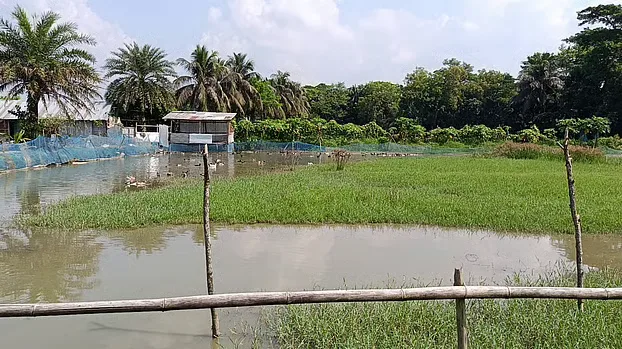
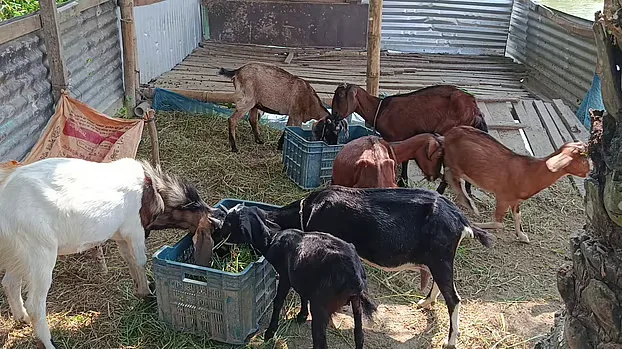
Then Rahima said that she saved money by selling eggs and bought a goat. He said, "I bought a goat. Later it gives birth. The number of goats in the house kept increasing. I sold some of these goats and bought a cow calf. It also grows up and gives birth. This is how the number of cows and goats in my animal farm increased. Poultry has also grown in the same way.'
Rahima said, "Once I saw that there were only 21 cows in the farm. The house for keeping cows was still raw. Later I sold a few cows and built a house.
What's on the farm
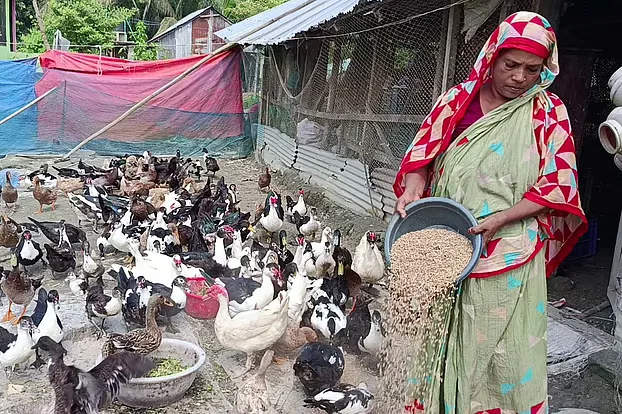
Rahima said, now there are 8 cows in her farm. There are about 13-14 goats. There are more than 500 ducks. There are 350 native chickens. Apart from this, there are vegetable gardens, fruit trees. In his fish enclosure, roe, catla, tilapia and pangas fish have been cultivated.
Rahima said, "In everything on the farm, we rely on our own production as much as possible. Do not buy vegetable seedlings or chicks from the market. We raise chickens and ducklings in our own farm. I produce saplings from seeds myself. Bibi Rahima said, buying seedlings or seedlings from the market often causes problems. That's why he produces seedlings and babies in his own farm.
Family Prosperity
Rahima said that her family's prosperity came from the income of the farm. He said that with the income of the farm, his two sons and four daughters have been educated and the family expenses have been continued. Two of the four daughters are married. Currently, one daughter is studying for graduation, another is studying for Madrasah.
One of the two sons currently works in Saudi Arabia. The husband also sent the farm income abroad. However, after a few years, he was brought back to the country to help with farm work. One son is helping in the farm after passing SSC.
It can be seen on the surface, the fish enclosure next to the residence. There are flocks of ducks. Various native fruit trees including papaya, plum have been planted along the perimeter. Ripe and unripe papayas hang from rows of papaya trees. Next to it, you can see the food of various vegetables including gourd, pumpkin. On the other side there are cow and goat farms.
Loss of half a million rupees during Corona
Rahima said that apart from her own income, she invested in the farm by taking loans from various government and private institutions. Farm income also increased. However, the first shock to the income is during the Corona period.
Bibi Rahima said, 'I could not buy poultry food during the lockdown. About 2,000 laying hens had to be sold at a low price. How many maunds of milk have been wasted due to lack of buyers is not counted. Milk had to be dumped on roads and canals. Then the cows also became weak due to lack of food. So in the end I was forced to sell many cows at a nominal price.' After that, he tried to fix the farm again with a loan.
Damaged again by floods
The 2024 flood came when the farm was being rebuilt after the corona damage. According to Bibi Rahima, her six cows and about two thousand egg-laying ducks were washed away in that terrible flood. About a thousand chickens died. About 350,000 fish floated from the pond.
Rahima said, the plan was to sell the fish at the rate of 35 taka each. But it was not possible to sell it because everything was washed away by the flood. For more than two months, everything in the farm was submerged in flood water.
Bibi Rahima claims that she has lost about two and a quarter million rupees in that flood. Despite such huge losses, only some agricultural seeds received no government assistance. Rahima said, 'I expected to get a bank loan on easy terms, but I did not get it. Currently I have a debt of more than crore rupees.
Bibi Rahima claims that now she is in a new crisis in the management of the farm. He said that a local young man has often been demanding donations from him in the identity of a political party leader. If the contribution is not paid, the farm and the family are threatened. He claimed that after informing the local leaders of that political party, organizational measures were taken against the young man but the threats did not stop.
🌐 This English version was automatically translated from the original Bangla.