
The wages of garment workers are increasing from Tk 4500 to Tk 6465
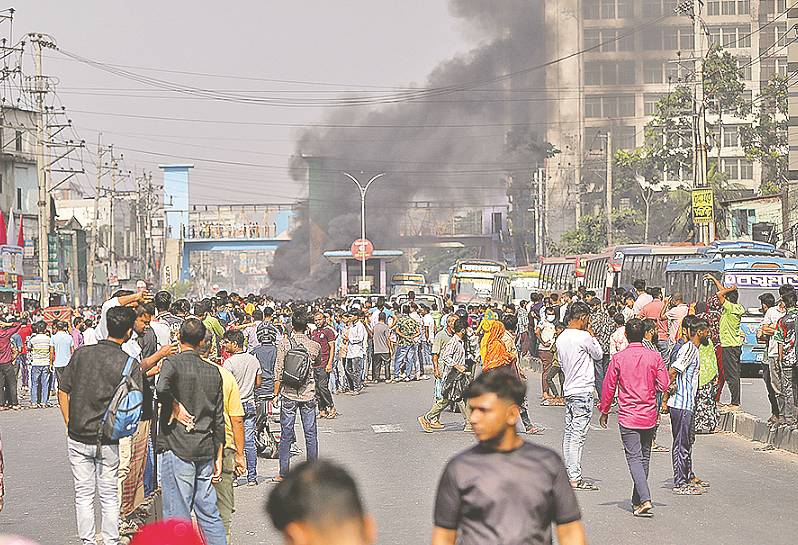
Regardless of when the notification is, the new wage structure will be implemented from December 1, the wage board said.
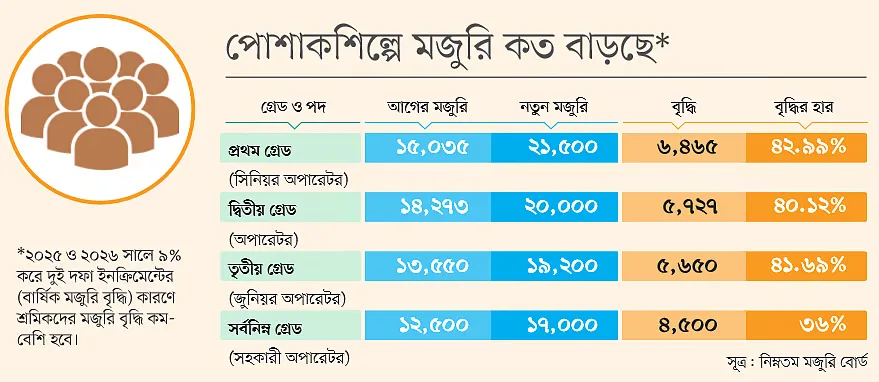
In the new wage structure for readymade garment workers, wages will increase by 36 to 43 percent across grades. Compared to the wage structure set in 2023, this increase is from 4,500 to Tk 6,465. However, due to two annual wage increases (9 percent each) in the last two years, the rate of increase will be lower than the current wages of workers.
The proposal regarding the new wage structure of the workers was accepted in the Minimum Wage Board meeting last Tuesday. The meeting started at half past three on this day. The wages of the first three grades are negotiated between the employers and the workers. However, due to lack of agreement on the fourth or lowest grade wages, a vote was eventually taken. After one o'clock in the morning, the proposal to set the minimum wage at Tk 17 thousand was accepted by the vote of the majority of the members. This wage was effective on December 1, 2023 at Tk 12,500.
While the total wages of the four grades of workers have been fixed, the basic pay and various allowances are yet to be fixed. The fifth meeting of the wage board will be held today on Thursday to decide how much the basic salary, house rent, transportation, food and medical allowances and salary allowances of the employees will be.
After consensus among the board members on these issues, the wage board will take an opinion on a draft wage proposal. Then the final draft will be sent to the Ministry of Labour. The Ministry will verify it and issue a notification. However, regardless of when the notification is, the new wage structure will be implemented from December 1, the wage board said.
After determining the wages late on Tuesday night, Chairman of the Wage Board Syed Azad Subhani told reporters that the decision on the wages has been made after 25 days of the formation of this Wage Board, which has never happened before. He said, finally, there was a vote between the wage proposal of Tk 16,000 for the owners and Tk 18,000 for the workers. By majority vote, the proposal regarding the determination of Tk 17 thousand was accepted.
Wages board sources said that in the first phase of the meeting on Tuesday, three grades of wages were agreed upon. But the fourth or lowest grade wages were not negotiated. The revised proposal of the workers for this grade wage was Tk 18 thousand. And the proposal of the owner was Tk 17 thousand. At one point, the ownership went down to Tk 16,000. Later their revised proposal was made to Tk 17 thousand.
Sources also said that after one in the morning, the Chairman of the Minimum Wage Board decided to vote between the proposals of the owners and the workers. Six board members voted. Two representatives of the labor side voted in favor of Tk 18 thousand. The votes of the remaining four members were in favor of Tk 17 thousand. They include the chairman of the board, an independent member, a permanent member of the owners' side and a representative of the garment industry owners.
Later, Babul Akhtar, the representative of the labor party, told reporters, "We have never been satisfied with the minimum wage in Bangladesh." After much discussion we agreed on grades one to three. And for the fourth grade, we offered 18,000 in the seventh round on behalf of the workers. But in the end, Tk 17 thousand were determined in the voting. We are not satisfied with this. Which happened according to the decision of the board. Now I am calling for this wage to be implemented in all factories quickly. He urged the workers to return to work.
However, there is a mixed reaction among labor unions on the minimum wage set. Bangladesh Garments Sramik Oikya Parishad has welcomed the setting of minimum wage of Tk 17 thousand. On the other hand, the Industrial Bangladesh Council (IBC) said in a statement that the minimum wage of Tk 17,000 did not reflect the expectations of the workers.
How much wage is recommended in any grade
According to the decision of the Wage Board, the highest wage increase of Tk 6,465 or 43 per cent in the prescribed structure is for the post of Senior Operator or Grade I. The total salary of this grade is going to be 21 thousand Tk 500; Earlier it was 15 thousand Tk 35. Apart from this, the wages for the second grade of operator post has increased by 5 thousand Tk 727 or 40 percent. The total salary of this grade is going to be Tk 20 thousand; Earlier it was 14 thousand Tk 273.
19 thousand Tk 20 has been fixed for the third grade of the post of Junior Operator. Earlier wages in this grade was 13 thousand Tk 550. Wages increased by 5 thousand Tk 650 or 41.70 percent. And the lowest or fourth grade wages have increased by 4 thousand Tk 500 or 36 percent.
According to BGMEA, 14 percent of workers in the garment industry work in Grade 4. 26 percent work in Grade 3, 32 percent in Grade 2 and 28 percent in Grade 1. As such, most of the laborers work in the second grade. And in this grade, the salary has increased to the second highest by 5 thousand Tk 727.
The representative of the labor side of the wage board said that if a worker's wages are close to the specified grade of the new structure, his wages will increase by Tk 2,000. Apart from this, sweater factory workers will get higher daily wages than before.
650 workers work in the cute dress industry, an eco-friendly factory in Dhamrai. At present, the factory authorities pay one and a half million rupees per month. In the new wage structure, the wage cost of the factory will increase by about Tk 40 lakh.
When asked to know, Sheikh HM Mostafiz, Managing Director of Cute Dress Industry, told Protham Alo, 'Their profit will decrease due to increase in wages. If buyers don't pay extra for clothes. We have already discussed the matter with the buyers. They are willing to raise prices. Because of that, the global demand for ready-made garments has decreased quite a bit. However, few buyers agreed to increase the price.
In the early 1990s, the lowest wage for a worker in the garment industry was Tk 627. In 1994, that wage increased by 48 percent to Tk 930. Then the minimum wages of garment workers increased by 11 thousand Tk 570 in about 30 years. The minimum wage was last increased by 56 percent in 2023.
When asked to know, Nazma Akhter, president of the Combined Garment Workers Federation, told Protham Alo, "The workers expected that the minimum wage would be Tk 18,000 in the end. As such, the workers are not completely satisfied with it. However, the bargaining of the workers in the wage board has been better than in the past. Compared to the lowest grades, wages in the upper grades have increased more than in other periods.
🌐 This English version was automatically translated from the original Bangla.