
Why Elon Musk wants to put a million satellite data centres in orbit
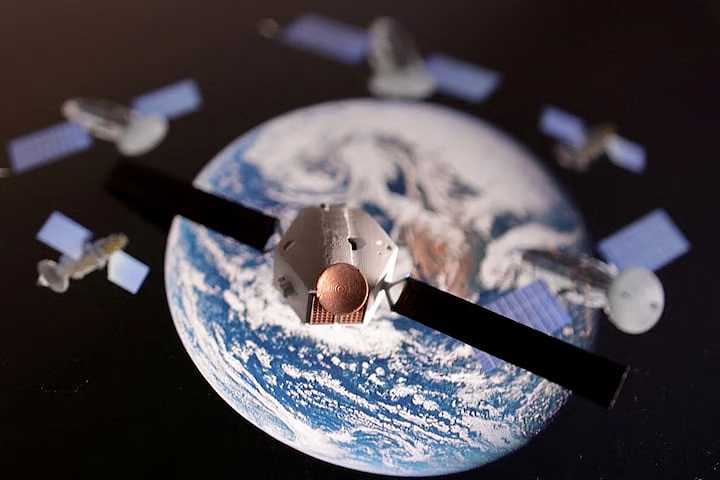
The United States this week approved a plan by billionaire Elon Musk, founder of space technology, space transport and artificial intelligence (AI) company SpaceX, to launch one million satellites. The push comes amid a row over data centres, as the industry searches for alternative sites to power the AI revolution.
The US Federal Communications Commission (FCC) approved the plan, called "Starmind", last Wednesday. The agency said it was the first such approval in the country's history.
In a statement posted on X by FCC Chairman Brendan Carr, the agency said: "At this critical moment in the development of superintelligence (advanced artificial intelligence), the FCC is authorising SpaceX to deploy one million compute modules in orbit. They will process vast amounts of data for use on Earth."
Carr added that under President Donald Trump, the United States is "moving forward decisively so that this transformative technology creates opportunity, boosts investment and delivers benefits for the American people."
Data centres are the foundation of AI computing, and demand for AI software is growing fast. Against that backdrop, Musk's plan offers an alternative: using the sun as the power source for these AI data centres.
What is Musk's plan?
Data centres are a key foundation of AI computing, and demand for AI software is rising rapidly. Musk's plan offers an alternative: using the sun to power them.
SpaceX says power sources are becoming harder to find on Earth, and that this is the fastest way to expand the supply of electrical energy.
On its website, SpaceX describes the plan as "low-cost and high-capacity".
The company already has satellites in space. Starmind is expected simply to add to that fleet.
According to Satfleet Live, which tracks satellite positions in real time, there are currently about 16,928 active satellites in orbit. Of these, 11,190 (66 percent) belong to Starlink, SpaceX's internet service.
Under the terms of the FCC licence, SpaceX must begin deploying satellite data centres by November 2033. It must then launch 10 percent of the maximum number, or 100,000 satellites, by November 2035, 50 percent by November 2038, and have the entire fleet in space by 2040.
According to a 2025 article by the US non-profit Environmental and Energy Study Institute, large data centres can consume up to 5 million gallons of water a day. That is equivalent to the water used by a town of 10,000 to 50,000 people.
Why does Musk want to send data centres into space, and what are the advantages?
As AI expands rapidly, so does the need for data centres.
But data centres require huge amounts of land and consume large amounts of water and electricity. They also produce substantial fossil-fuel carbon emissions.
Data centres generate intense heat, and cooling systems need vast quantities of water to keep the technology running. This puts pressure on water supplies and on communities already suffering from drought, particularly as global temperatures rise with climate change.
According to a 2025 article by the US non-profit Environmental and Energy Study Institute, "Large data centres can consume up to 5 million gallons of water a day. That is equivalent to the water used daily in a town of 10,000 to 50,000 people."
These concerns have triggered widespread protests against data centres, from the United States to Kenya and India.
Surveys show that this widespread opposition to data centres was a major issue for many voters in the US midterm elections earlier this month.
Last July, anti-data-centre protesters held 142 rallies in 42 states as part of nationwide demonstrations against the rapid expansion of AI infrastructure.
Satellite-based data centres face no such land constraints. In theory, they can also use solar power as their energy source, as SpaceX has said in its plan.
Keeping data centres cool in space, however, is a major challenge. Unlike on Earth, there is no air or water, so the heat they give off cannot escape through conduction or convection.
Objections to the plan
Astronomers and environmentalists have criticised Musk's plan. They say it will add to pollution in the sky, making the night sky even harder to see.
On Wednesday, the American Astronomical Society (AAS) said in a statement that it was "disappointed and dismayed" by the FCC's approval of the plan.
In earlier filings with the FCC, the AAS had said the proposed satellite fleet would, first, seriously damage decades of public investment in astronomy research infrastructure and, second, impair the ability of astronomers and the public to enjoy and study the night sky.
The AAS said it was deeply concerned about the future of publicly funded astronomy under a fundamentally altered night sky, and about the waste of taxpayers' money on astronomy research infrastructure around the world.
"We hope SpaceX will maintain coordination with the National Science Foundation. But we are concerned that the licence granted to SpaceX contains no requirement for formal coordination," the statement said.
Related reading:
Elon Musk's SpaceX makes an unusual request to build data centres in space
SpaceX rocket carries robotic arm into space to boost satellite capability
🌐 This English version was automatically translated from the original Bangla.