
Ex-banker's handicraft business now sells Tk 15 lakh a month
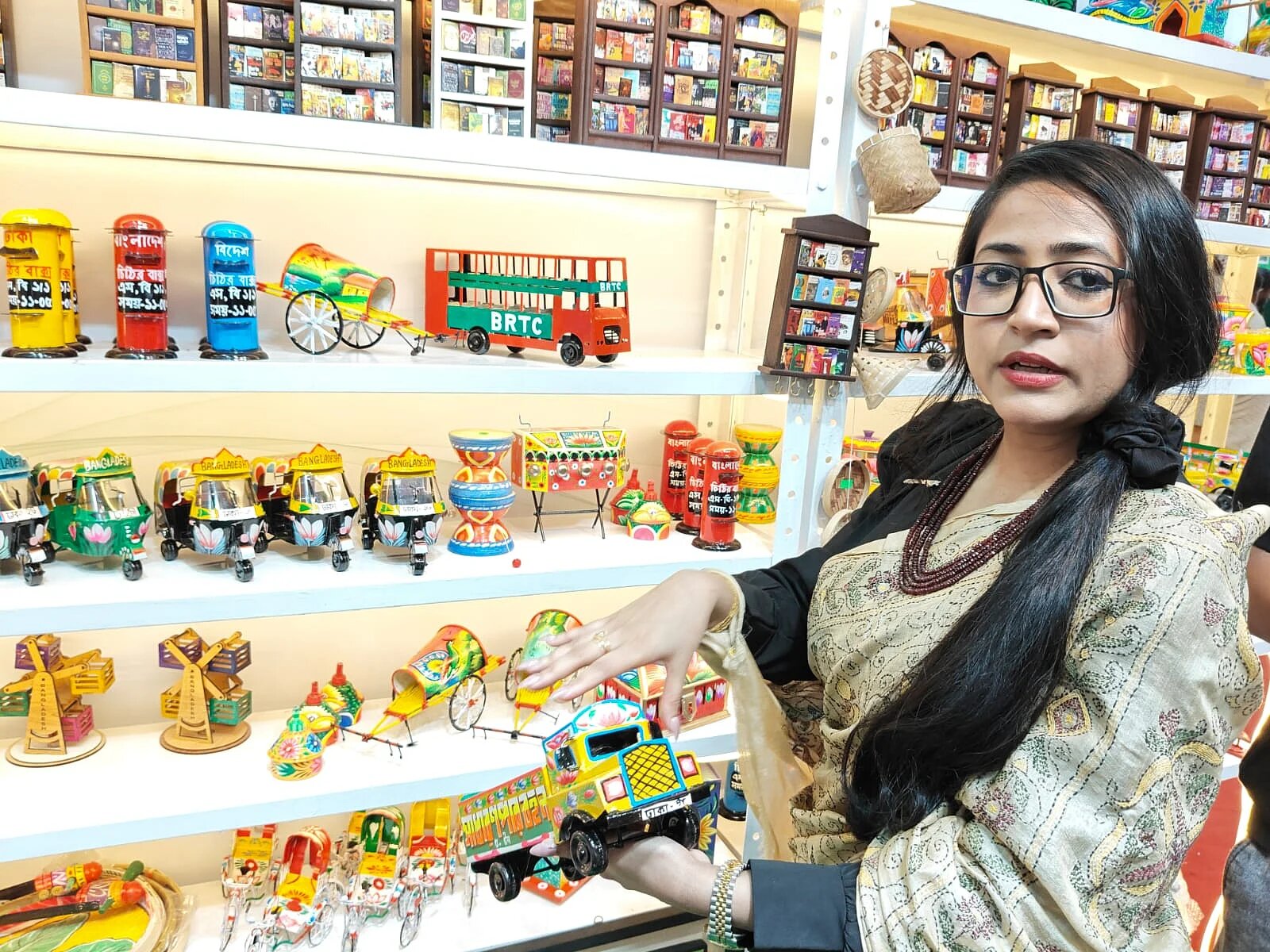
A gift need not be something bought off the shelf. It could be a card made from photographs, a mug printed with a name or a favourite design, or a keepsake decorated with the country's traditional rickshaw art.
Farzana Islam Mouri started out in 2020 with the idea that a gift should be special and stay with the recipient as a lasting memory. With just Tk 3,000 in capital, she began making handmade gift cards at the dining table of her home.
The business has since grown considerably. Begun at her home in Khilgaon, Dhaka, it now operates from an office in Malibagh. Her company, Craftimation, makes more than 500 types of products, including rickshaw-art items, metal miniatures and mugs with 3D designs. The handicrafts are priced from Tk 50 to Tk 20,000. The company has nine permanent employees and brings in another 50 to 60 artists and artisans when orders and workloads rise.
What began as a small venture making personal gifts now supplies corporate clients such as bKash and Unilever. Monthly sales range from Tk 10 lakh to Tk 20 lakh, averaging about Tk 15 lakh, the entrepreneur says.
Mouri says her business has reached its present scale through creativity, new product ideas and keeping pace with the market. She also suffered a major financial setback along the way but recovered. Recently, she received the SME Foundation's Best Small Woman Entrepreneur of the Year award from the prime minister.
In 2024, waterlogging destroyed goods worth about Tk 20 lakh. To absorb the loss, she cashed in her mother's Tk 10 lakh savings certificates. She now aims to create 1,000 jobs in the years ahead.
Started with Tk 2,200 under a pseudonymous Facebook ID, Jashore's Sanjida is now a successful entrepreneur
How it began
After completing her BBA, Farzana Islam took a job at a bank. Within about three months, she realised it was not for her. She says she had been drawn to drawing, handwork and crafts since childhood, and whenever she needed a gift for someone, she preferred to make it herself rather than buy it. She enjoyed making cards from family photographs for a friend's wedding or putting together hand-decorated gifts. The idea of turning that joy into a profession took hold, and in 2020 she opened a Facebook page called Craftimation.
Her first products were handmade cards, small lamps and tree lamps, and she learned various craft techniques from YouTube. She later began using ceramic clay to create three-dimensional designs on mugs, customising them with customers' names, photographs or company logos. Demand for the mugs was so strong that she focused mainly on them until mid-2023.
The turning point for the business was taking part in a fair organised by the SME Foundation in 2025, where I won the best stall award in the handicrafts zone. I met a number of corporate organisations there, and it gave us good branding. — Farzana Islam
As orders grew, Farzana says, she opened an office on the ground floor of her home about two years in. Some young people from the neighbourhood joined her. She reinvested a large part of her earnings, and daily sales rose, particularly around Eid.
In 2024, however, the business took a heavy blow. Heavy rain and waterlogging flooded the ground-floor office-cum-workshop and destroyed finished goods worth about Tk 20 lakh. To cover the loss, she had to cash in her mother's savings certificates worth Tk 10 lakh.
Farzana Islam says the turning point for the business was taking part in a fair organised by the SME Foundation in 2025, where she won the best stall award in the handicrafts zone. She met several corporate organisations there, which brought good branding as well as new customers and business contacts.
US-returned Zahidul is now a successful agri-entrepreneur
When a customer who has bought a product suggests a new design or item, Craftimation makes it. This is how its product range has grown beyond 500. The company's two biggest lines, however, are rickshaw art and metal miniatures, in which objects and showpieces made of metals such as iron or tin are given skilful artistic replicas.
Craftimation puts Bangladesh's traditional rickshaw art on a range of everyday items. Rickshaw paintings adorn mobile phone covers, pens, sunglasses, hurricane lamps, tiffin boxes and wooden trunks. Even customers' own portraits or those of their family members are rendered in rickshaw-art style. Fifteen artists work on this.
In 2023, alongside rickshaw-art products, Mouri invested in making metal miniatures. The company produces small-scale versions of rickshaws, vans, baby taxis, trucks, bioscopes, bullock carts and pushcarts.
Metal sheets are bought and parts are made using hand-press moulds and laser cutting. The pieces are then welded into a frame, and artists paint rickshaw art on them.
On pricing, Farzana Islam says a miniature rickshaw sells for Tk 450 apiece, a CNG-run auto-rickshaw or tempo for Tk 630, a bookshelf for Tk 799, sunglasses for Tk 400, a hurricane lamp for Tk 1,200 to Tk 1,500 and a truck for Tk 1,500. Customised paintings cost Tk 2,000 to Tk 5,000, while large special-design pieces can cost up to Tk 20,000.
She says some small entrepreneurs buy products from Craftimation at wholesale prices and sell them under their own names.
Corporate clients such as bKash and Unilever, meanwhile, commission products tailored to their needs, such as awards recognising employees' good work, gifts for business partners, souvenirs for foreign guests or annual corporate gifts.
Plan before you start
Farzana hopes to export her products in future. She is planning to set up a factory for this, with the aim of creating jobs for 1,000 people.
Her advice to new entrepreneurs is to plan for at least two to five years before starting a business, and to study the market, competitors, production costs and potential customers in their chosen sector thoroughly.
🌐 This English version was automatically translated from the original Bangla.