
This wetland sees Tk 7-8 crore of fish trade a year: visit to buy fresh fish
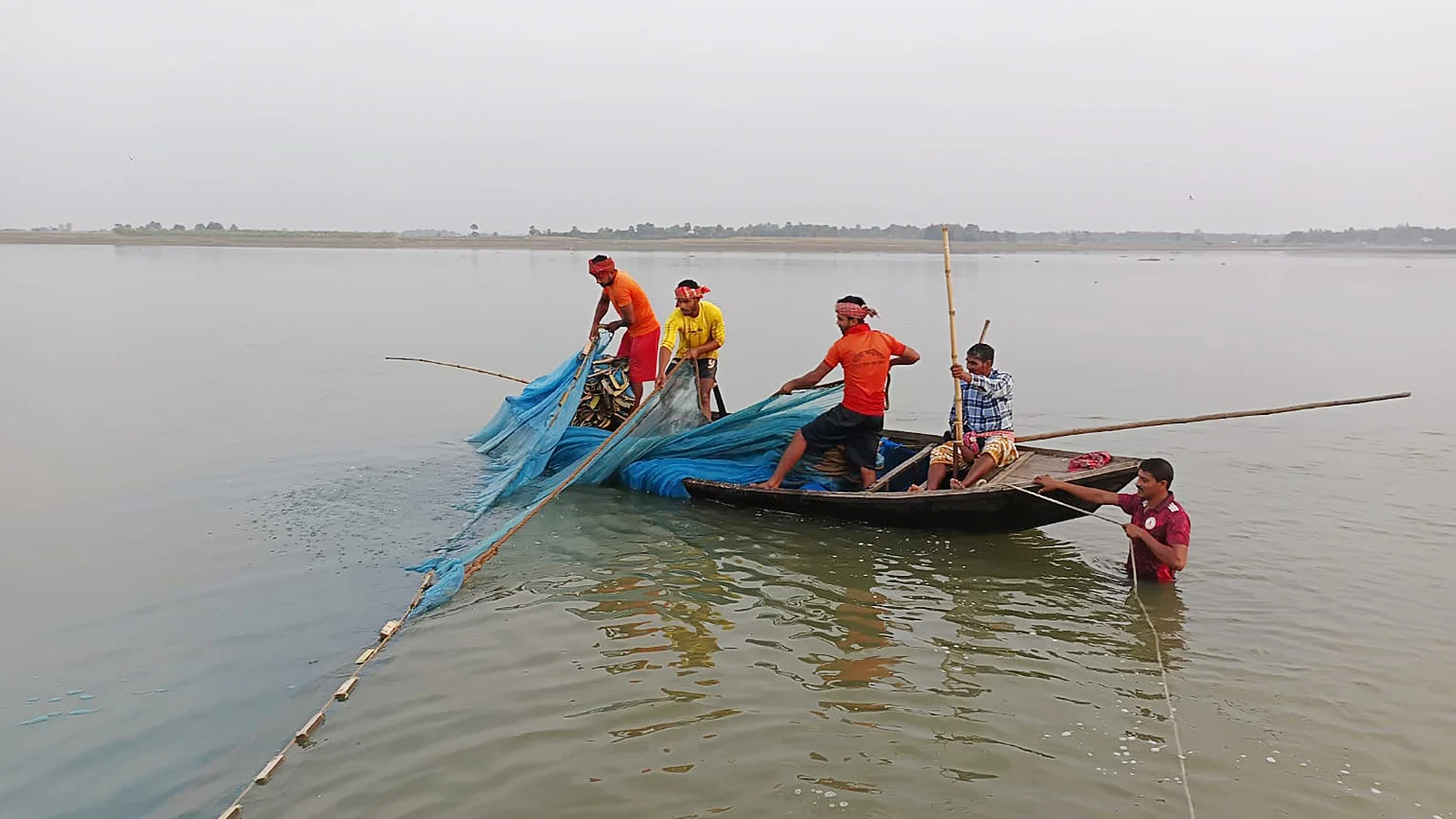
The lives and livelihoods of people in 70 villages of Gomastapur in Chapainawabganj and Porsha in Naogaon are tied to this wetland. The wetland is known by several names, one part of it being Bilkujain. Abul Kalam Muhammad Azad travelled from Rajshahi to Gomastapur to see it.
Boats loaded with fish are pulling in at the landing. Baskets of fish are being unloaded. Two men carry a basket between them and run towards the fish depot. The depot owner calls out: 'Khoyra, khoyra, khoyra... small fish khoyra.' In a moment people swarm round the basket like bees. The depot owner calls: 'Three twenty, three twenty, three twenty...' Then the bidding goes up: 'Three thirty, three thirty...'
It feels as if a fish festival is on. As the water has receded at one end of the wetland, a patch of land has emerged, and the fish depot is set up there. One end of this wetland lies in India and the other in Bangladesh. From dawn, traders from three or four surrounding districts crowd in on bicycles, motorcycles, bhotbhotis and CNG-run auto-rickshaws.
From Asharh until Falgun–Chaitra, this paddy wetland hosts a festival of fish. According to local traders, Tk 7 to 8 crore worth of fish is traded here every year. The lives and livelihoods of people in about 70 villages across four unions of Gomastapur in Chapainawabganj and Porsha in Naogaon are bound up with the rice and fish of this wetland. It is something of a fairy-tale wetland of rice and fish.
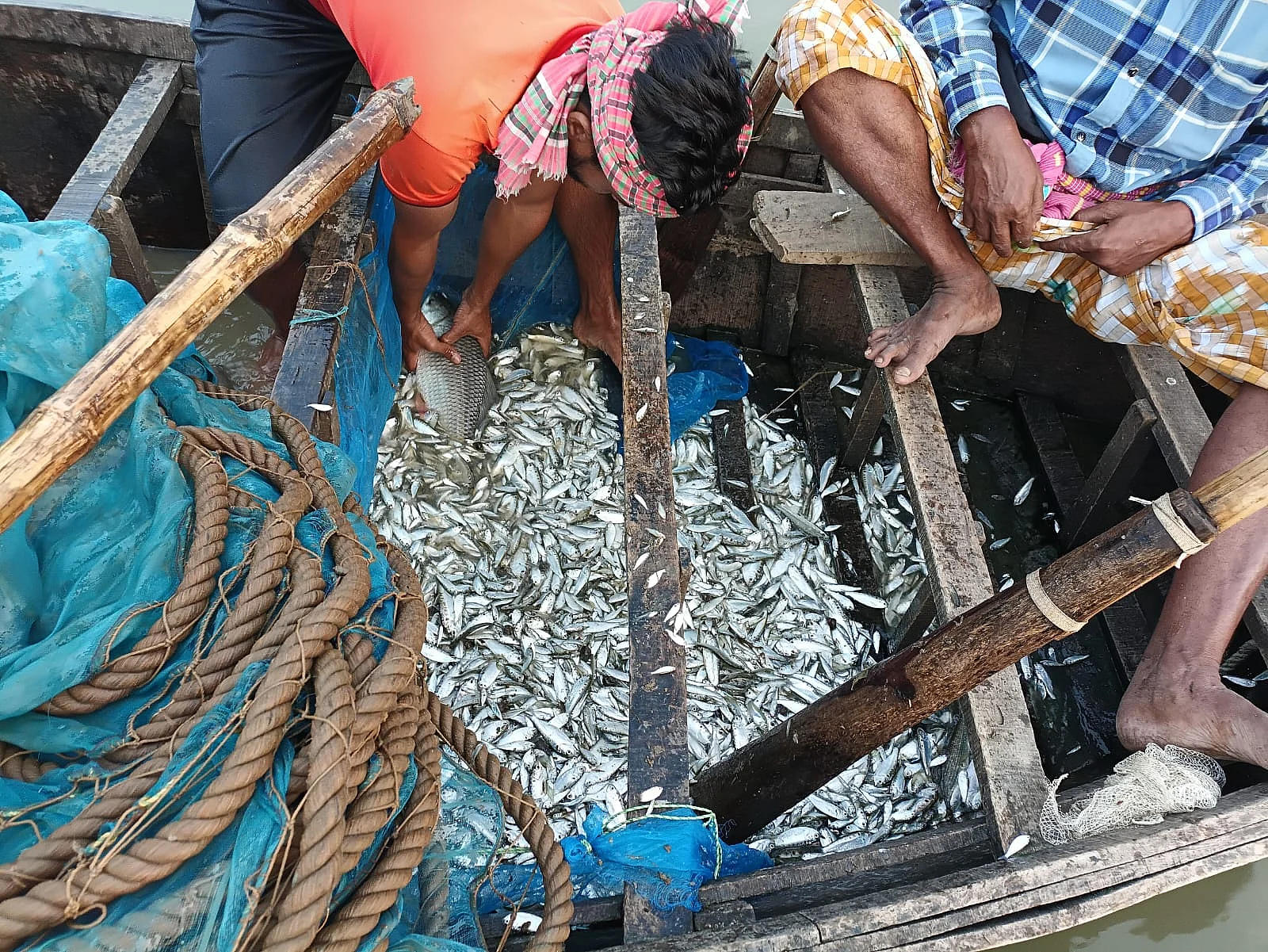
One part of this wetland, in Radhanagar union of Gomastapur upazila in Chapainawabganj, is called Bilkujain. It is leased out as a government water body. But the wetland extends under six other names too: Chansada, Telkuch, Gumroil, Dobalaind, Ruhimari and Shukdubha. In the dry season, boro rice is grown on these parts; for the rest of the year they lie under water. Then fish are caught on these same paddy lands. During that time a fish depot is set up on the Islamganj playing field. As the water drops, part of Bilkujain emerges first, and the depot moves there. Locals call this landing 'Ganjer Ghat'.
I set out from Rajshahi at 6:30am on November 14, heading for the wetland. After covering about 70 kilometres, I reached Adda Bazar in Gomastapur upazila of Chapainawabganj. After breakfast there, I travelled another 16 kilometres to Ganjer Ghat at Bilkujain. The shops and fish depots at the landing are built as small mud huts. These huts are submerged by water in the monsoon, so they have to be rebuilt every year. From a distance they look like rows of pitched tents.
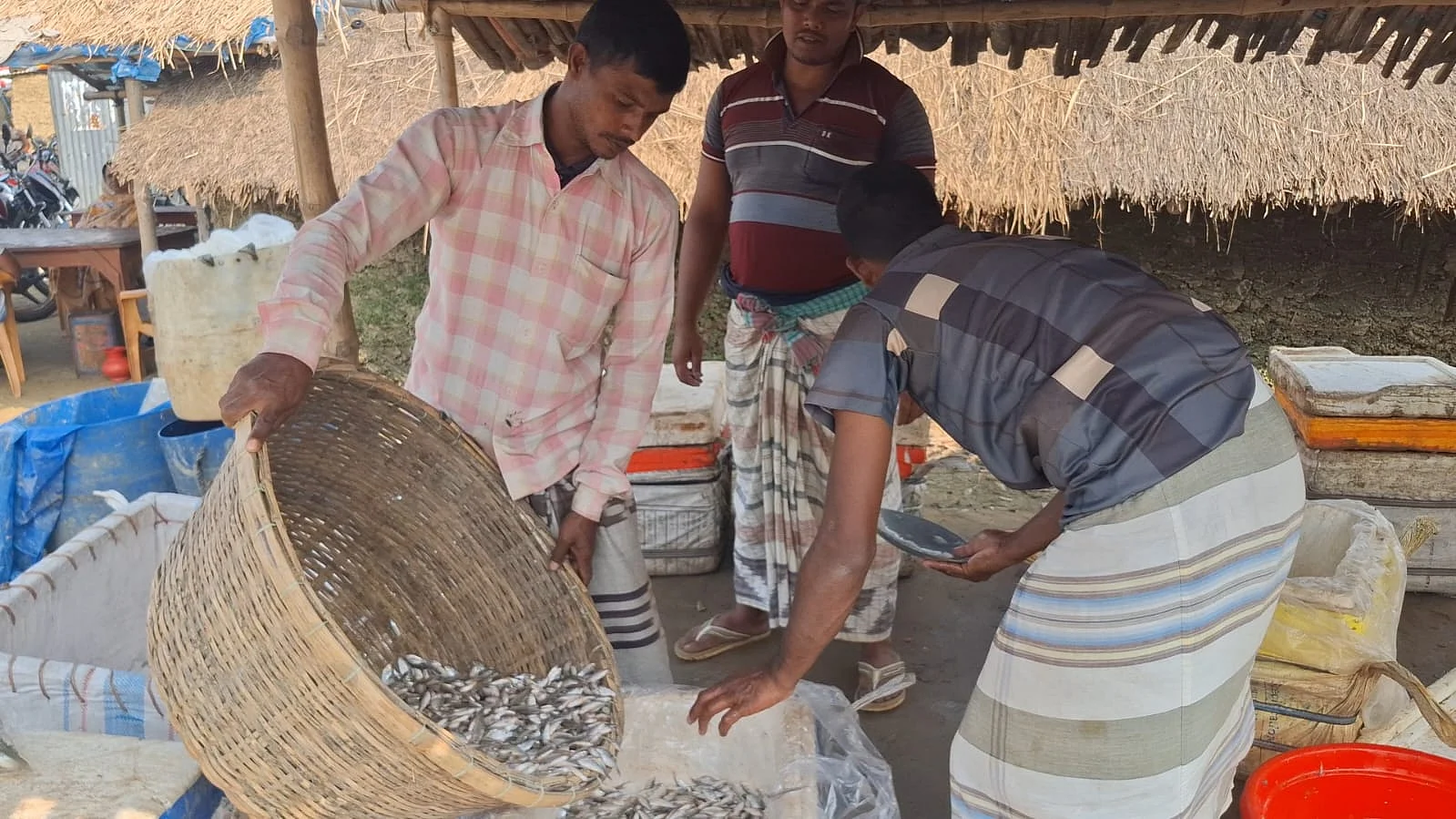
The shouting starts as soon as you step onto the landing. The water in the wetland has begun to fall. Boats full of fish are coming in to the landing by way of the Punarbhaba river. After the fish are unloaded from the boats, sorting begins. Some people run with fish boxes, others with blocks of ice. An ice factory has come up here to preserve the wetland's fish, and ice from there is being packed into the fish boxes.
Asmaul from Roknpur village said 20 other partners work with him in fishing. Their eight boats and 100 nets had been set in the wetland overnight. After the fish were unloaded from the boat, he reeled off the names of various species in one breath: tengra, puti, katapatasi, guchi, boal, baim, aair, goti and prawns.
Beyond the bustle of the landing, the wetland has another face. As far as the eye can see, there is a vast expanse of water. In the distance a few trees can be seen, faint as in a picture. Local resident Ripon Ali said: 'What you see in the distance is Indian territory.'
The fish trade
The government leases just 83 acres of Bilkujain's water body for three years. This time the bid came to Tk 1.35 crore. The wetland is leased through competitive tender every three years. This time Noman Ali took the lease.
Noman Ali said that although the lease is taken for three years at once, payment has to be made according to the season. At the time of taking the lease in the first year, Tk 45 lakh must be paid. The remaining Tk 90 lakh is paid in instalments over the next two years.
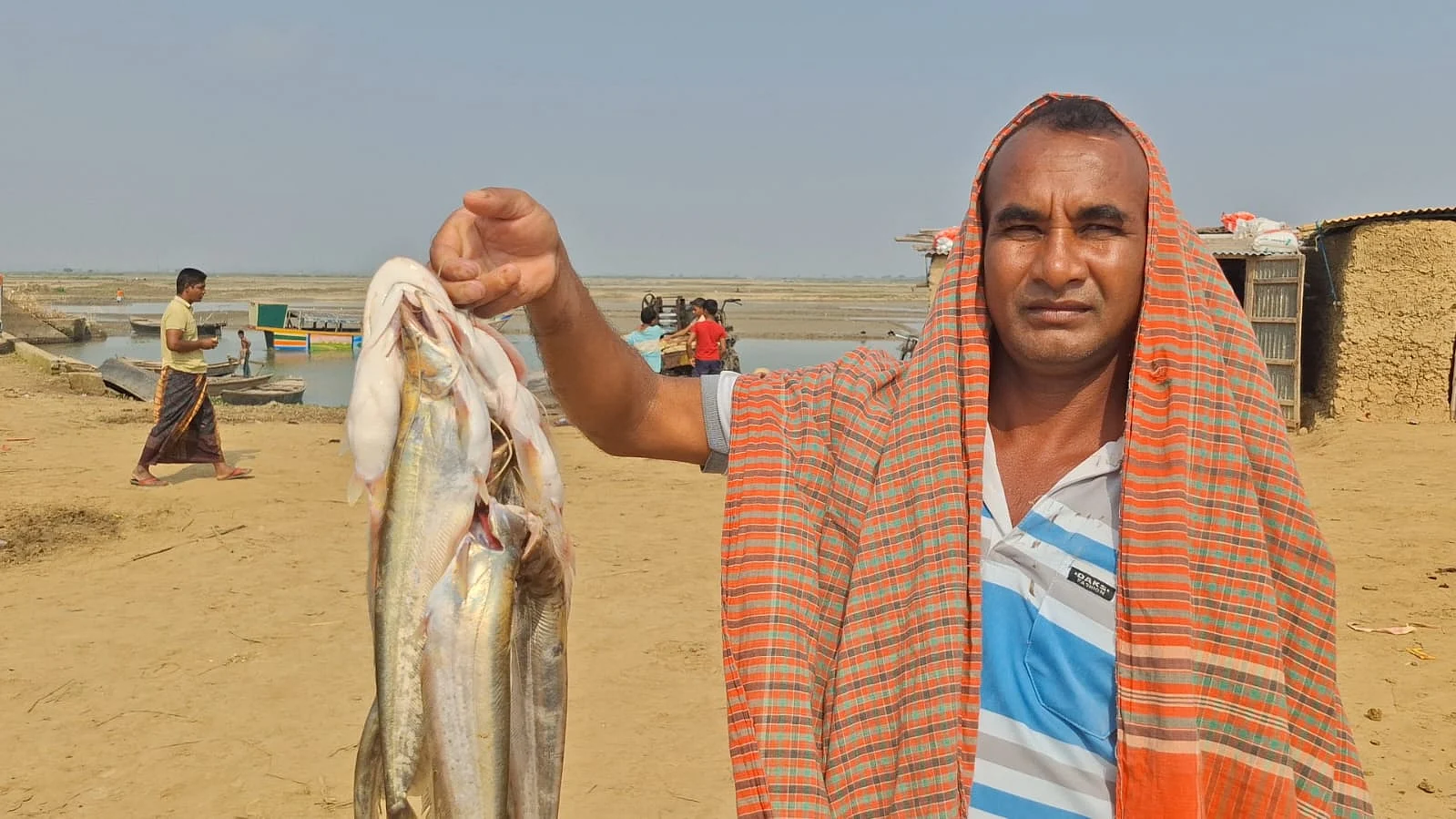
I wanted to know how much fish is traded in the wetland in a season. To get an idea, one depot owner took me to Yusuf Ali, a former member of Radhanagar Union Parishad, who was sitting at a fish depot. Taking into account all the mouzas of the wetland, he said: 'It varies from year to year. But in one season, fish worth Tk 7 to 8 crore are caught in the wetland.'
Lutfar Rahman, a resident of Islampurganj village, said he has 20 bighas of paddy land in this wetland, and his family lives off this rice. For most of the year, he said, they get fresh fish from the wetland every morning. Thanks to this wetland, they are still living up to the saying 'a Bengali lives on fish and rice'.
How to get there
From Rajshahi, take the commuter train at 9:15am and get off in two hours at Rohanpur station in Chapainawabganj. Take a CNG-run auto-rickshaw for Tk 60 to Adda in Gomastapur upazila. From there, a rickshaw ride at Tk 50 easily takes you the 16 kilometres to Ganjer Ghat. You can return to Rajshahi the same way on the 5pm commuter train. It is also possible to travel by bus.
The story of the lost dolphins of the Shitalakshya
🌐 This English version was automatically translated from the original Bangla.