Handmade perfumed soap is going from Narsingdi to Japan
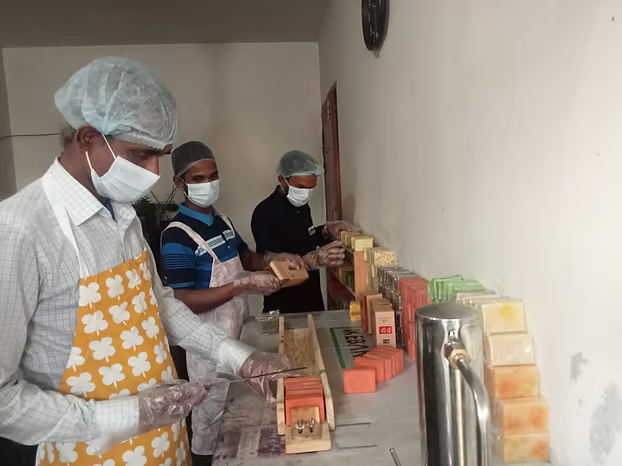
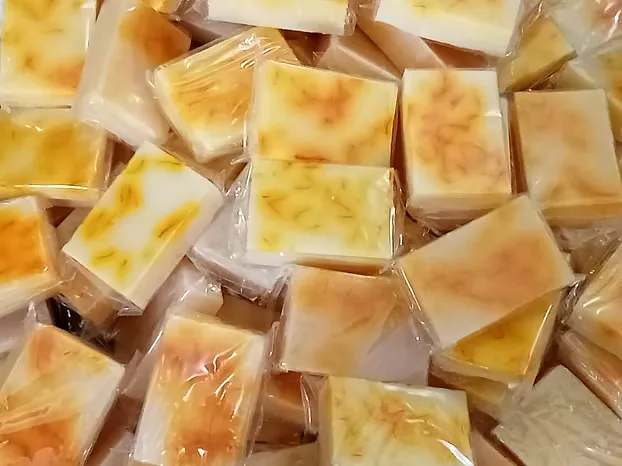
Various aromatic soaps are made with neem, rose, coffee, saffron or aloe vera. Its name is Ikebana. Entrepreneur Mohammad Anisur Rahman made this herbal soap in a small factory in Ghorashal, Narsingdi. Although made in the country, the main market of this soap is Japan. In addition, Ikebana is exported to more than five countries.
In 2007, Anisur Rahman started making this special soap with a capital investment of about 60 thousand taka. The value of his soap gradually increased. Currently, this entrepreneur exports an average of 50,000 soaps per year. Apart from this, there are sales in the local market.
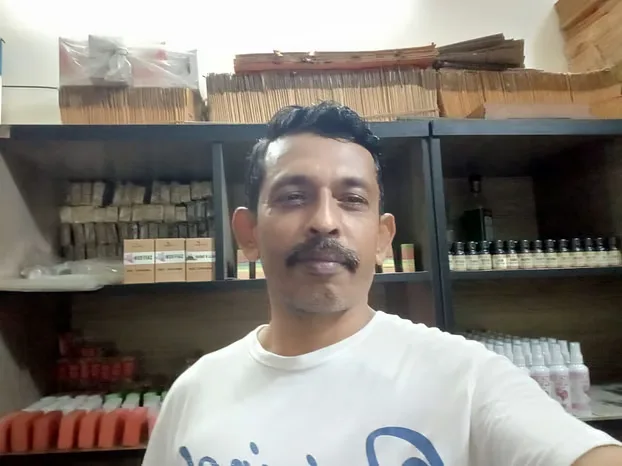
Entrepreneur Anisur Rahman's house is in Khanipur area of Palash police station of Narsingdi district. Although he wanted to become a doctor in his childhood, he did not become a doctor later due to various limitations. For this, Anisur, a science student at the end of high school, was admitted to the management department of Dhaka College. He completed his graduation from there in 1998 and post graduation in 2000. Worked part-time in a company in Taiwan during post-graduation. He started working full time there after a year after completing his studies. But Anisur was looking for a bigger job opportunity.
About the year 2002. An elder brother known to Anisur looked for a new job. A Japanese company wants to start business in Bangladesh. They will mainly import different types of agricultural products from this country. So starting from the registration of that company, the coordination of product collection, export etc. has to be done. Anisur was already interested in agricultural products. So he agreed.
Anisur Rahman said that he used to send turmeric, guava leaves, neem leaves and other products to Japan for the company. Worked for four years. In the meantime, he started thinking about setting up his own business.
Anisur quit his job in 2006 and established a company himself. Named Bangla Natural Agro Limited. Using his work experience, he started sending various products including turmeric to Japan. In March next year, visit Japan to participate in a food and agricultural fair sponsored by the Japan External Trade Organization, or JETRO. He took turmeric, guava leaves, neem leaves and other products with him. Along with these products, he also took some locally made neem soap. This soap brought him great success as an entrepreneur.
Anisur said that neem soap was not very popular in the country at that time. A resident of Mohakhali area named Nim Hakim used to make this soap. Take some soaps from him and go to the fair in Japan. There, a Japanese customer liked Neem soap very much and placed a purchase order of $5,000.
Anisur Rahman is very happy after receiving the purchase order. Because, for him, it is like getting rain without asking for clouds. However, after returning home due to setbacks. You can't make soap yourself. He thought that he would make soap with someone and send it to Japan. But even after visiting several soap companies, he could not find any way.
After a few days, Anisur found a soap maker named Anu Mia in Old Dhaka. However, he was initially disappointed when he went there. Because, Anu Mia quit making soap that day. The factory is also abandoned. But finally, Anisur was able to convince Anu Mia. Rented the factory. Then he invested 60 thousand rupees and bought new equipment. After that, with the help of Anu Mia, Neem made soap and sent it to Japan.
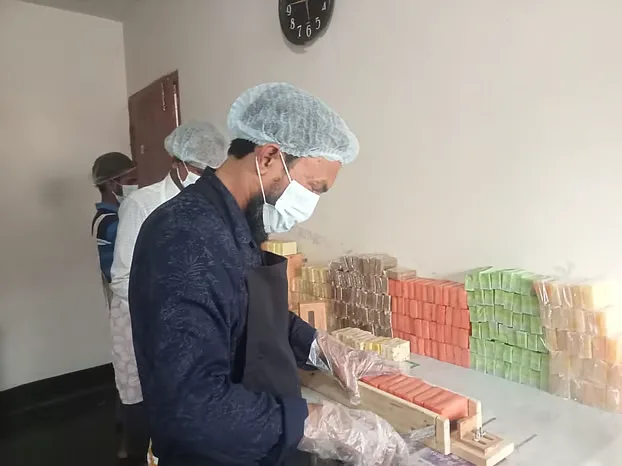
Since then, Anisur Rahman started exporting soap. Next year he went to Japan to participate in another fair. This time I met a Japanese soap maker named Takyuchu Shinohara. He learned the technique of making soap from the Japanese for a few days during this journey.
Anisur says, 'I learned from Takeuchi Shinohara how many types of scented soaps can be, how clear a soap can be. He later came to Bangladesh and taught me how to work. In 2009, Anisur again went to the fair in Japan. He took with him several samples of soap made by himself. He received a purchase order of about 60,000 pieces of soap from there.
After that, Anisur did not have to look back for buyers for soap exports. Since then Anisur has been regularly exporting soap to Japan. He made soap for 14 years in that factory in old Dhaka. When Corona started in 2020, he moved the factory to his home village of Narsingdi.
Currently 13 workers work in Anisur Rahman's factory. And 15 types of soap are made there. This entrepreneur makes soaps with aromas like coffee, moringa (sajne), lavender, saffron, aloe vera, neem, rose (rose). Anisur exports about 50 thousand pieces of soap annually.
Apart from Japan, he directly exports soap to USA, UK, Qatar and Dubai. Apart from this, many Bangladeshis bought soap from him as a souvenir and took it to different countries.
Anisur Rahman also told about the specialty of his soap. He said, "Palm oil is usually used in commercial soaps in the market. But I use olive, coconut, castor, rice bran and sunflower oil in my soap. This soap is made in natural ways and with natural ingredients. And various essential oils are used to increase the fragrance.
🌐 This English version was automatically translated from the original Bangla.