
Touhid's products made of pineapple, banana, jute yarn are going to 39 countries
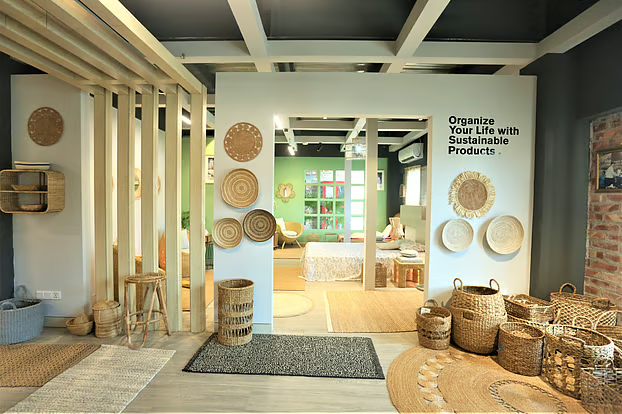
Entrepreneur Towhid bin Abdus Salam has built six factories to manufacture eco-friendly home furnishing products. 4 thousand 700 workers are working in the company which started with only 14 lakh taka and one worker.
Banana peel, pineapple leaves or jute fiber - yarn is made from these materials taken from the surrounding environment. Then they are mixed with yarn made from cotton (cotton). These mixed yarns are later used to make various home decoration products. Many materials like bamboo, cane, palm leaf, palm fiber, dhanche, kachuripana and corn husk are also used in this work.
From shataranji, baskets, shopping bags, t-shirts, cushion covers to kitchen, pet and garden related materials are made in this process. Almost all of the products are exported to 39 countries of the world including Germany, Netherlands, Spain. Among the buyers are well-known companies such as KKK, Zara and Walmart.
About a decade and a half ago, the entrepreneur established a company called Classical Handmade Products BD Limited (CHP) to make products in a sustainable way. Tawheed bin Abdus Salam. In the beginning, he worked and taught in a big buying house, but later left it to become an entrepreneur. The objective was to provide employment to the lower class people.
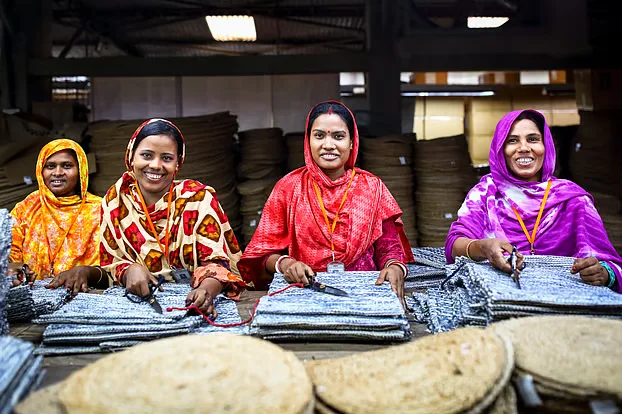
Started with only 14 lakh taka and one worker, the investment so far has reached about taka 200 crore. And 4 thousand 700 workers are currently working in the company. About 86 percent of them are women. Recently, I spoke with Towhid bin Abdus Salam, the founder and managing director of CHP at the Motijheel office of the capital.
Education and Employment
Touhid bin Abdus Salam's ancestral home is in Mathbaria upazila of Pirojpur. But born and brought up in AGB Colony of Motijheel in the capital. Mother wanted her son to be a doctor. And the father wanted the son to be a designer of clothes. Although not a doctor, he fulfilled his father's wish by graduating in fashion design.
Touhid did not have such a desire to become an entrepreneur from the beginning. At the end of high school, he was admitted to BGMEA University of Fashion and Technology (BUFT) in 2000. He was a student of the first batch of fashion design department there. While in his third year, Touhid got a job in the marketing department of a buying house in the Netherlands. After graduation, he was a part-time lecturer in two universities in addition to that work.
Enterprise Start
About the month of March 2007. Touhid went to Nilphamari with his colleagues. At that time, while traveling in Dimla upazila of Ezla, he saw a local woman breaking stones. You can find out by talking that the woman gets only 40 rupees for working all day. The woman could not even eat properly due to lack of money. This incident left a mark on Touhid's mind. After three months of returning from Nilphamari, he left the job of the buying house. He went into business with his own capital of 14 lakh rupees.
Touhid's initiative started with renting a small room in Motijheel and one worker. In November 2007, he set up three weaving factories in Nilphamari and Rangpur. Each factory employs 30 workers. His aim from the beginning was to export. For this reason, after two months of setting up the factory, they participated in an exhibition in Germany with their self-made shatranji. There customers like their products very much.
After returning to the country, he registered a company called Classical Handmade Products (BD). In March 2008, the German textile company Kik placed a purchase order of 100,000 backs for around 86 lakh taka. Since then, the scope of his business has increased.
Increased scope of business
Demand for CHP's products increased further after the first shipment of Shataranji. In 2010, he started making baskets along with Shataranji. Its main raw materials are bamboo, cane, jute, palm leaves, kashful trees and hogla leaves. The demand for baskets also increases within a short period of time. Touhid said, at that time baskets and shataranji were exported separately to Europe in five containers every month.
Gradually, CHP started to make laundry bags, rugs, placemats, carpets, wraps, chairs, lampshades, shopping bags, tables, kitchens, pet houses and garden related furnishing materials. We are making products to decorate every part of a room, from rugs to bed cushions, says Tauhid.
Apart from this, the list also includes materials like spa products, paper boxes and metal boxes. Apart from this, Touhid is making new products with different types of recycled products. For example, making baskets by making yarn from plastic bottles. Again, the yarn obtained from the garment factories is used to make other products.
Six factories in three districts
At present CHP has six factories in Nilphamari, Bogra and Rangpur. Tawhid said that 283 types of products are made in the factories. Last year, the income from exporting these products was about 1 crore 11 lakh US dollars or about 110 crore taka (99.45 taka per dollar).
Touhid said, Sustainable materials, good working environment, quality of products and delivery of products on time - these four things I always adhere to. On the other hand, due to studies in fashion design, there was a clear understanding of product colors, acceptable standards, management systems, etc. Due to these reasons, it has been possible to advance business initiatives.
Currently CHP has 17 domestic and foreign certificates. Apart from this, CHP has received national awards several times in the handicrafts export category. The basket of awards includes President's Industry Award, Bangabandhu Industry Award, SME Award, HSBC Export Excellence Award and Versatile Jute Producer Award.
Selling products online in the country
Currently, CHP is selling products online in the country as well as exporting. Besides, their products are sold in some events including the National SME Fair. Apart from this, there is also a plan to open its own sales center in the future, said Touhid.
He wants to strengthen his position in exports. Tawhid said that he will do direct branding of his products abroad. For this, they have already started the process of making documents in Europe. Besides, he has plans to produce and export the raw materials of these products locally in India and Sri Lanka.
Challenge Key
Tauhid had to face many challenges during Corona. At that time, he lost more than 8 crore rupees. Apart from this, the office was moved from Gulshan to Motijheel to save costs. Even after overcoming the shock of Corona, he is still facing some challenges.
Tauhid said that due to the increase in price inflation, there are not many workers available for handicrafts at low wages. So getting skilled workers has become a big challenge. On the other hand, the dollar and energy crisis have also affected the business. Tawhid said that the price of electricity has increased. It also increases the cost of production. We thought of installing solar panels as a sustainable source of electricity. But due to the dollar-crisis, I am unable to open a letter of credit for the import of machinery.
Touhid said, 'Thinking about the supply and transportation facilities, everyone wants to have factories centered in Dhaka-Chittagong. And I took the factory to the village, to the poor people. They can work comfortably from their homes with their families. It also saves them a lot of money.
On the other hand, we are increasing the use of yarns like banana, pineapple or jute fiber in a sustainable way for the textile sector. These products are in high demand in domestic and international markets. It also reduces carbon footprint along with diversification of exports.
🌐 This English version was automatically translated from the original Bangla.