
Vanilla cultivation has started in the country, the price of one kg in the world market is Tk 30 thousand

We go to an ice cream shop and ask for vanilla ice cream. Or want a vanilla flavored cake at a cake shop. From ice cream to perfumes, vanilla flavor is used in many products. Vanilla has now become a part of everyday life for many, thanks to bakery products such as ice cream and cakes.
The good news is that commercial production of vanilla is now underway in the country. In 2019, vanilla cultivation started experimentally in Bogra as a hobby. Now entrepreneurs are cultivating vanilla in some places including Jhenaidah, Jessore, Chuadanga, Rangpur, Dinajpur, Sylhet, Chittagong Hill Tracts. Farmers could not go to commercial production yet. Currently, one kg of vanilla is being sold for around $250 (Tk 30,000) in the world market.
Surprisingly, the vanilla flavor commonly used in various products is actually artificial vanilla; Made with chemicals in the laboratory. This artificial vanilla is also imported to Bangladesh.
Natural production of vanilla is negligible. Natural production of this expensive spice is concentrated in only a few countries.
According to data from Fortune Business Insights, the global market for vanilla is over $4.1 billion. In 2034, this market may exceed 6.7 billion dollars. The vanilla market is growing at a rate of more than 6 percent every year.
This vanilla is actually a spice. Although the product is readily available now, the story behind it is not at all common. From the deep forests of the American continent it has spread from country to country. The history of colonial rule is also connected with it.
What is vanillaVanilla is originally the fruit of a creeping orchid-like tree, also known as vanilla bean or vanilla pod or fruit. Raw vanilla has no scent of its own. They are harvested from the tree when mature and processed for a long time. Then the particular scent is created and the vanilla extract is collected from there.Farming started in Bangladesh
Vanilla cultivation started experimentally in Bogra in 2019. Abu Hena Faisal Fahim, Senior Scientific Officer of Bogra Spice Research Center started vanilla cultivation.
Abu Hena Faisal Fahim shared his experience with Prothom Alo. In 2019, he and a group of researchers went to Indonesia to participate in a training on spices. There they know directly about vanilla cultivation. Later, Faisal Fahim brought a cutting of vanilla tree from Indonesia and planted it in the spice research center. Then more cuttings or cuttings (seedlings) are made from that tree and new trees are planted. Currently there are 60 vanilla trees in 3 centuries.
Madagascar is the top African country in vanilla (natural) production and export. According to the World Bank's World Integrated Trade Solutions (WITS) data, in 2025 Madagascar will export vanilla worth approximately $128.3 million.
In the next few years, small-scale cultivation of this vanilla was attempted in some places including Jhenaidah, Jessore, Chuadanga, Rangpur, Dinajpur, Sylhet, Chittagong Hill Tracts. A teacher of Dhaka's Sher-e-Bangla Agricultural University is also experimentally researching vanilla. However, no one has been able to start commercial vanilla production in the country so far.
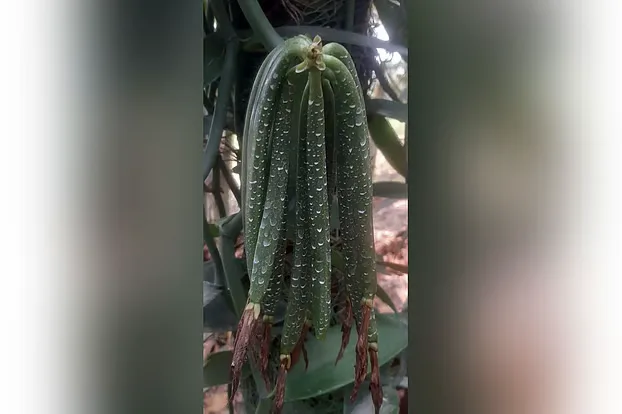
How long does it take to get the result
Vanilla is not common ground. For this organic decomposed media has to be prepared. In addition, shed is required. This can also be done with different plants in shade gardens; But the shed is more convenient.
A vanilla plant (cutting) may flower two to three years after planting. Each inflorescence has 13 to 18 flowers. Blooms usually last a few hours. Pollination takes place during this period. Commercial production is heavily dependent on pollination. After pollination, the fruit takes another seven to eight months to mature. The vanilla tree usually flowers in April; And the fruit ripens around November-December.
The work does not end even after harvesting the fruit. Fruits are processed and dried to make them marketable as aromatic spices. First kept in 60 degree hot water for 3 minutes. It is then kept in a box for fermentation for 24 hours. In this condition, the green vanilla bean acquires a black color.
For the next one month, it is regularly dried in the sun for two hours in the morning with soft light. Thus vanilla extract is prepared. The extract is then processed to extract the vanilla flavor and aroma. There is no commercially available method of extracting this vanilla extract in Bangladesh.
The largest importer of vanilla is the United States. In 2025, the country will import about 100 million dollars worth of vanilla.
Faisal Fahim, senior scientific officer of Bogra's Masala Research Center, said, "The climate of Bangladesh has been proven to be suitable for vanilla cultivation. However, vanilla cultivation is a very labor intensive and high investment crop in terms of initial costs. A minimum of 20 to 50 lakh rupees can be spent initially to take up a commercial project of 1000 trees on 50 century land. As a result, we will be able to provide cuttings to farmers officially after verifying whether it will be commercially profitable or not.
However, many individuals have already invested in vanilla cultivation. They have brought vanilla cuttings from countries like India, Indonesia, South Korea etc. Again these entrepreneurs are helping each other by cutting.
One such entrepreneur is Jessore Md. Sarwar Hossain. He has started mango and dragon cultivation as well as vanilla cultivation using shade canopy system.
Sarwar Hossain said that he started experimenting with vanilla four years ago. Due to lack of experience, some plants died in the beginning, but currently around 150 vanilla plants are growing in his garden.
Sarwar Hossain told Prothom Alo, "There will be no vanilla in Bangladesh - there is no such place. Now we need to increase production. If 100 farmers in the country are given the necessary vanilla cuttings, it is possible to prepare 1000 kg of vanilla beans for export after four to five years. Then the international buyers will start coming to Bangladesh.
how big is the market
According to Fortune Business Insights, the global vanilla market is worth more than $4.1 billion. In 2034, this market may exceed 6.7 billion dollars. The vanilla market is growing at a rate of more than 6 percent every year.
Vanilla is considered to be the second most expensive spice in the world. First is saffron. The price of vanilla is also very high in the international market. There are different grades of vanilla. Even a few years ago, the average price of one kg of vanilla in the global market was 550 dollars (about 50 thousand rupees). Later this price comes down. Currently it is selling for around 250 dollars (Tk 30 thousand). One of the reasons for this price reduction is the increase in the production of artificial vanilla.
use in any sector
The best-known use of vanilla is in the food and beverage industry. In addition to cakes, biscuits, muffins and pastries, vanilla is used in ice cream, yogurt, custard, flavored milk, candy, chocolate, various cereal products, etc. Vanilla is also used in perfumery, cosmetics and medicine. However, not all vanilla flavored products use natural beans; Artificial vanilla is more commonly used.
Vanillin is the main aroma compound of vanilla, which can also be produced industrially. According to a BBC report, the use of artificial vanilla is widespread. Therefore, the vanilla bean market, the natural extract and the synthetic vanillin market have to be looked at separately. The information given in the report on import and export of vanilla is natural vanilla. Artificial vanilla accounts for 95 to 99 percent of all vanilla flavors used in the world.
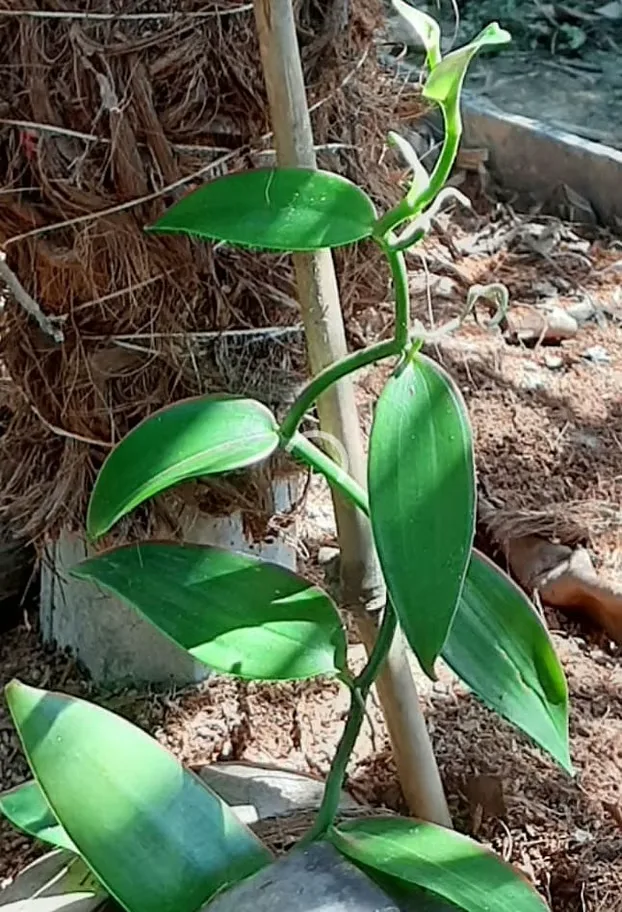
First production in Mexico
According to BBC, the African country Madagascar is currently at the top of the vanilla trade. But the spice did not originate there. The trail of vanilla began in the jungles of Mexico and Central America. The history of the spread of vanilla throughout the world is quite interesting.
Former BBC World Service journalist Tim Ecott has written a book about the origin of vanilla and its spread from country to country. The book is called 'Vanilla: Travels in Search of the Lashes Substance', which was published in 2004.
According to Tim Ecott in the book, the Totonac tribes of present-day Mexico's Papantla region were the first to cultivate vanilla. In the 15th century, the Aztecs defeated the Totonac tribes and conquered the Papantla region. The Aztecs began using vanilla to flavor a special chocolate-like drink.
Then, when the colonial rule of Spain started in Mexico, royal flavors including vanilla and chocolate of the Aztec emperors were supplied to Spain. After crossing the Atlantic, vanilla quickly made its own way. Within a short period of time, it became the royal spice in the countries of Europe. Later other colonial powers turned to vanilla cultivation. Eventually it spread to Indonesia, India and other tropical countries.
Madagascar top exporter, US major buyer
Madagascar is the leading African country in vanilla (natural) production and export. According to the World Bank's World Integrated Trade Solutions (WITS) data, in 2025 Madagascar will export vanilla worth approximately $128.3 million. Madagascar is followed by France, Germany, Uganda and Canada in vanilla exports. Countries export vanilla worth between one and a half to four billion dollars a year. The export of the Netherlands and Indonesia is also more than one million dollars.
On the other hand, in terms of imports, France, Germany, Canada, Italy and Switzerland are next. Basically, these countries import vanilla beans and process them to extract them and re-export them. Due to this, the names of these countries are at the top of both the import and export list.
Major producing countries also include Indonesia, Uganda, Mexico, Papua New Guinea, India, Comoros, Tanzania. Tahiti in French Polynesia is also known for producing a special type of vanilla.
🌐 This English version was automatically translated from the original Bangla.