
Ruhul, who left the engineering profession and became an agricultural entrepreneur, successfully built 550 bigha 'King Silage'
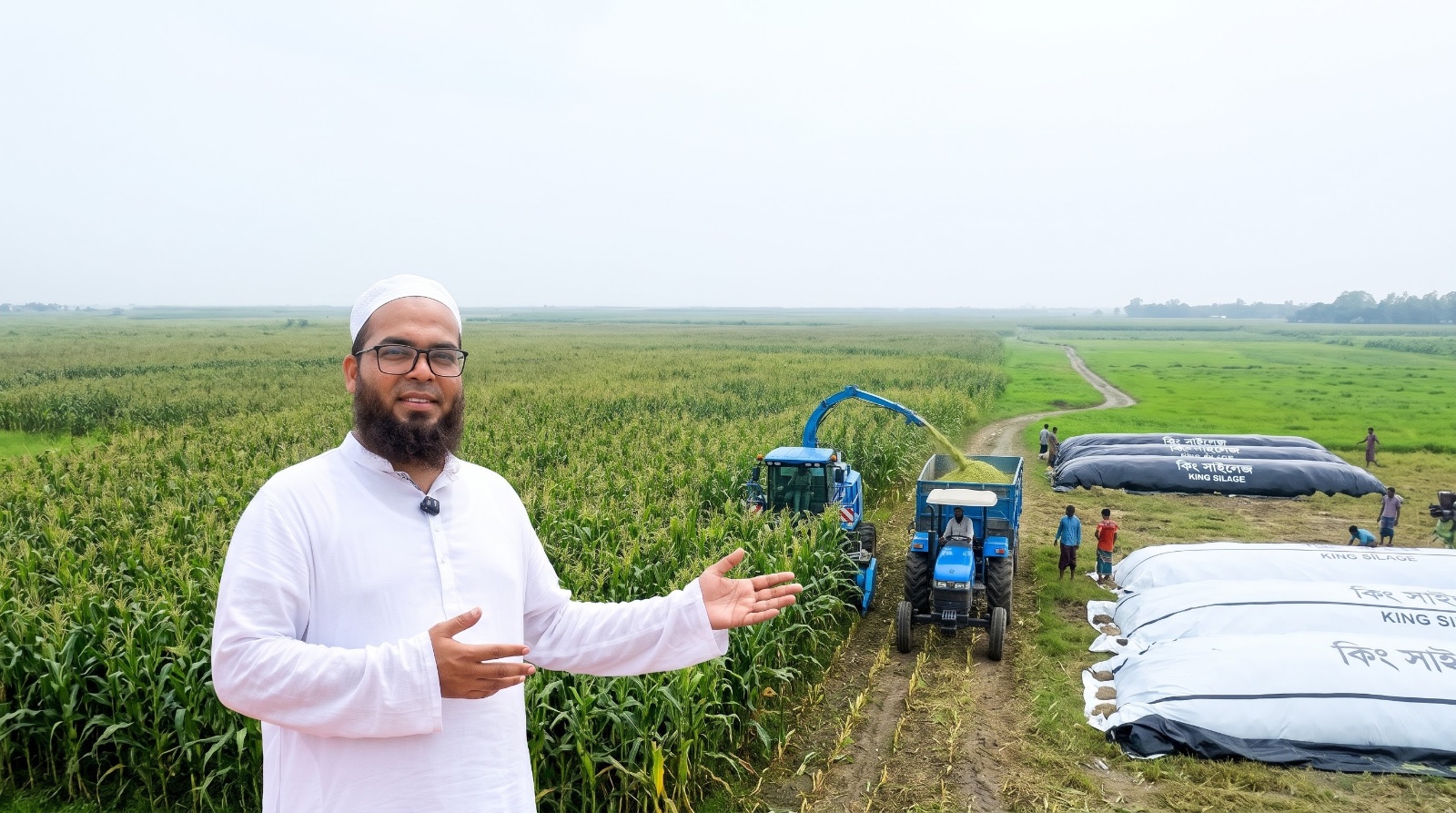
As the nation's dairy and cattle farmers struggle to meet production costs amid unbridled consumption of grain feed, corn silage is showing new hope as a cost-effective and nutritious alternative. And engineer Ruhul Hasan Sabuj has chosen this promising agricultural industry as his life's vow. Leaving behind the conventional corporate career of engineering, he established a large silage producing company 'King Silage' in Bhagyakul village of Srinagar upazila of Munshiganj district.
As any new venture has a rocky start, Ruhul Hasan Sabuj's journey was no exception. When he decided to take up soil and fodder production instead of a job or conventional business after completing his engineering studies, neither family nor well-wishers accepted it easily. Despite everyone's objections, he entered the field with unwavering faith in his dreams. However, in the first year of his entrepreneurial life, he faced huge financial losses and he became emotionally broken and at one point even thought of closing the business. But with the analytical perspective of an engineer, he realizes that if he gives up at that moment, his loss will be doubled.
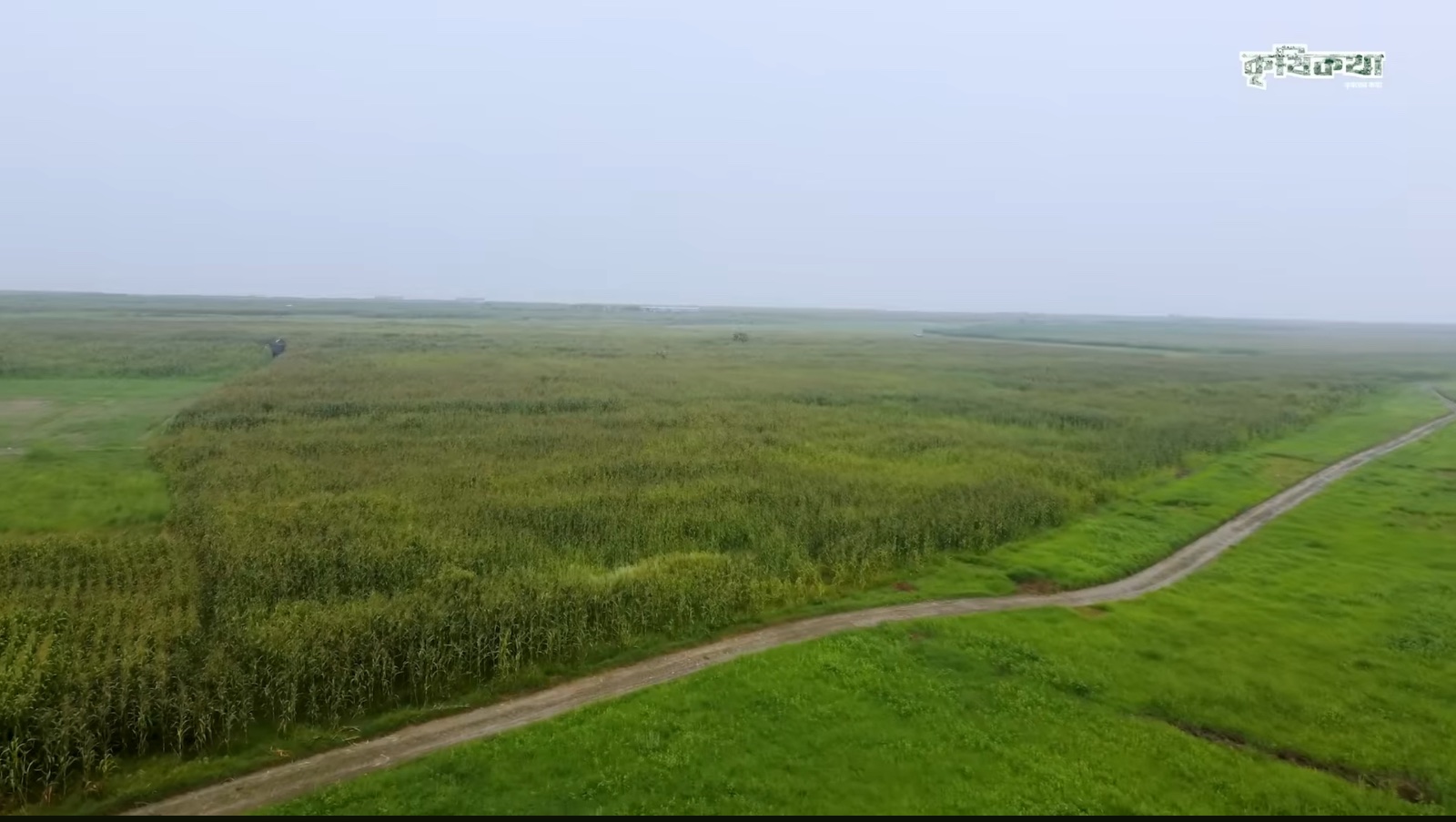
In the second season, even in that difficult time, he did not back down and started cultivating maize in 220 to 250 bighas with renewed enthusiasm. The second year was essentially a struggle for survival. Finally in the third year he saw the desired success and was convinced that he was on the right track. At present, in the fourth year of the project, about 530 to 550 bighas are cultivating maize for silage. His production target for the current season is around 4,000 tonnes, and he plans to expand the project to 1,000 bighas next year if the natural environment is favourable.
Quality Control Engineer's Perfect Account
Due to increased demand for silage in the market, many farmers complain of buying poor quality silage and not getting the desired milk or meat. Many unscrupulous traders sell maize husks or kernels separately and make silage with only stalks, which do not meet the nutritional needs of livestock. Raja Silage has adopted an uncompromising policy in this area. When kernels from improved varieties are in the 'milking stage'—that is, a white milky pulp emerges when pressed with a fingernail—the ideal time to harvest plants with whole kernels.
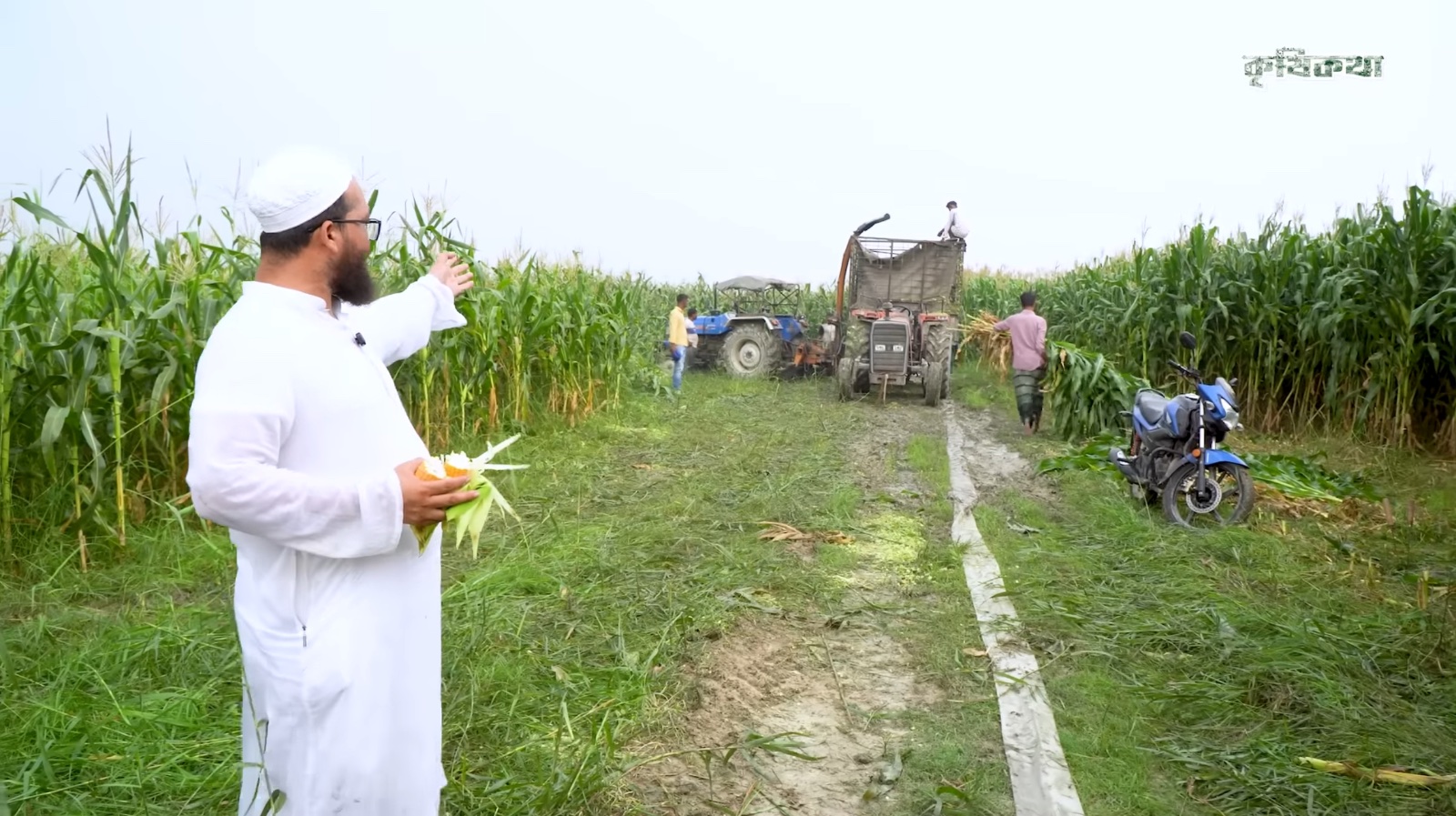
The harvested corn plants are finely chopped with high-capacity chopping machines imported from Turkey, so that fermentation is good and animal digestion is good. Then molasses (chitagur), lab culture (lab culture) and necessary probiotic ingredients are mixed in the chopped corn pit (peat). After mixing the ingredients, the entire pit is completely air-tight and kept for 21 days. Corn is dark green when harvested but takes on an attractive golden color within 12 to 48 hours due to proper fermentation.
To maintain silage quality, special attention is paid to moisture content. King silage ensures 60 to 65 percent moisture, which does not ooze water when pressed into the palm but leaves the palm lightly moist. After 21 days of complete fermentation, the silages are vacuum-sealed and marketed in two layers of sacks – polyethylene liners on the inside and plastic sacks on the outside, so that no air can get inside.
Seasonal Challenges and Farmers' Confidence
One of the major challenges of this business is the variation in weather conditions during different seasons of the year. Best quality silage is produced during Rabi season starting from October-November due to favorable weather conditions. On the other hand, crops mature quickly due to intense heat during the kharif and severe drought seasons; As a result, maize sown 10 days apart is suitable for harvesting together, resulting in intense harvest pressure. Currently, the load point of king silage is selling at Tk 8 per kg including car loads, which ranges from Tk 9 to Tk 9.50 in off-peak or pulse seasons.
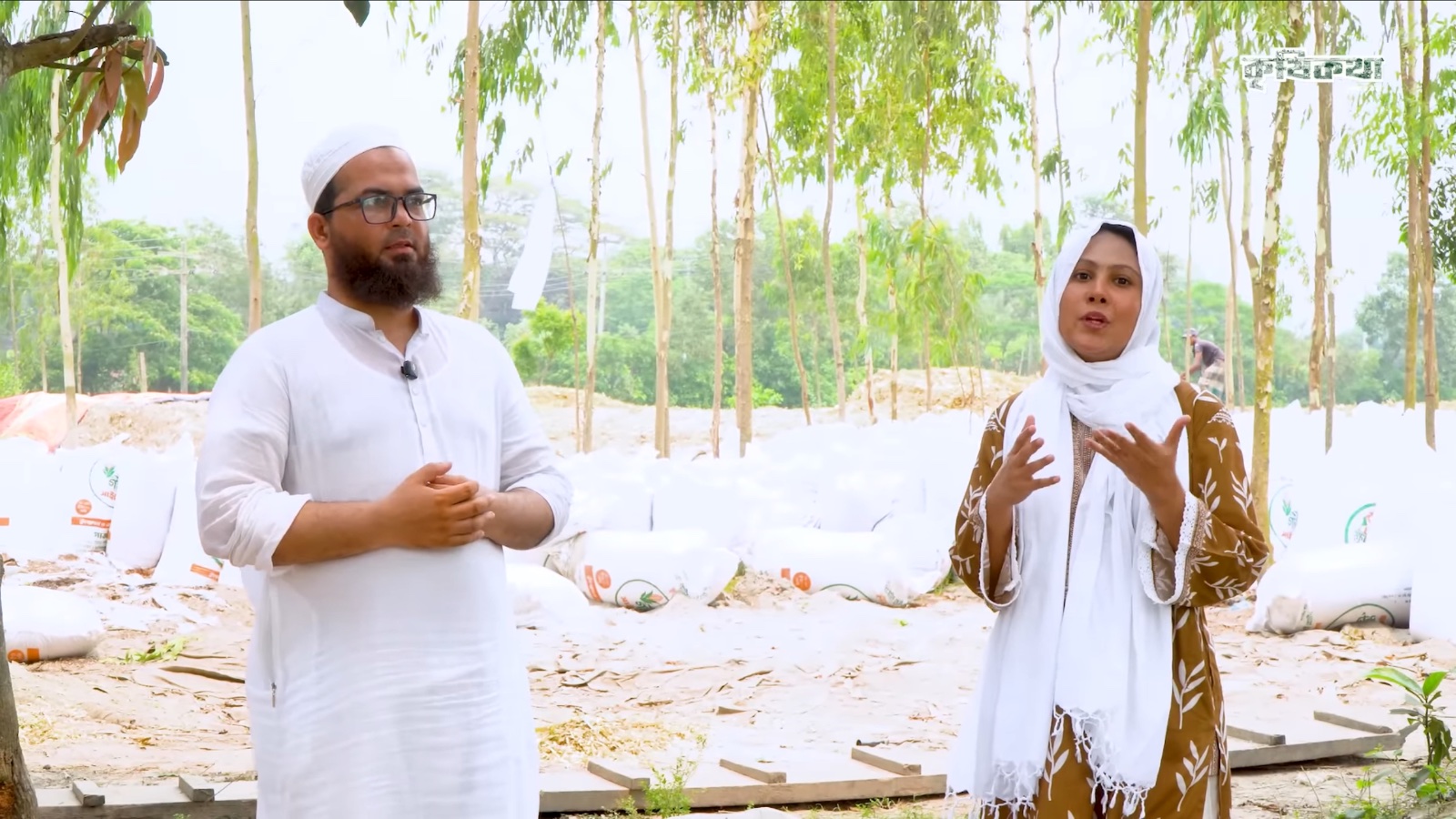
Currently, 25 to 30 farmers and entrepreneurs in the country are regularly collecting cow fodder from king silage. Due to carelessness of workers during bulk transport, some sacks sometimes get punctured, allowing air to enter and there is danger of silage spoilage. But so that the marginal farmers do not face this unwanted loss, Ruhul Hasan Sabuj has gained the trust of the farmers by exchanging the damaged sacks free of cost in the next shipment.

This brave journey of Ruhul Hasan Sabuj, leaving the sure confines of the engineering profession, proves that the agriculture sector of Bangladesh can become a highly profitable and respectable industry when combined with modern technology, scientific knowledge and business integrity.
🌐 This English version was automatically translated from the original Bangla.