From plastic waste to the European market: how a Bangladeshi entrepreneur built a 60-crore recycling business
Hamid Hasan Alvi, the founder of Polyeco Recycling Industries, was recently recognized as the 'Best Green SME Business Entrepreneur of the Year' at the 13th National SME Product Fair.
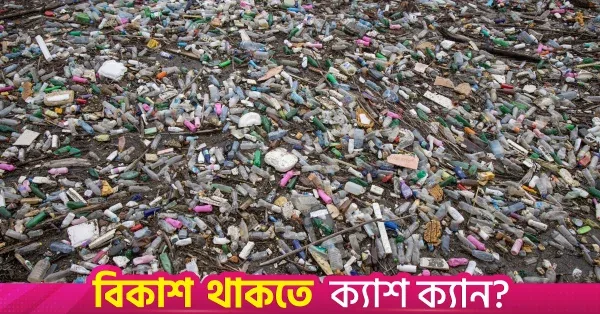
Polyeco Recycling Industries started more than five years ago with a mission to turn discarded plastic bottles into valuable resources. At present, the Sitakunda-based company in Chattogram is recycling used plastic bottles to produce internationally recognized raw materials. These raw materials are being exported to some European countries.
The company, founded by entrepreneur Hamid Hasan Alvi, manufactures recycled polyethylene terephthalate (PET) flakes. These products are exported to Spain, Italy, Germany and Lithuania. Manufacturers of packaging, textile fiber and foam products use these raw materials.
Alvi was recently recognized as the 'Best Green SME Business Entrepreneur of the Year' at the 13th National SME Product Fair. The business capital of the company, which started with an initial investment of around Tk 5 crore including bank loan, has increased to about Tk 60 crore at present. This year the company's export earnings are expected to reach around Tk 60 crore.
Polyeco Recycling Industries officially started production on February 22, 2022. Before this, preparations are made for about a year. Currently, the company is producing around 10,000 to 11,000 tonnes of recycled PET flakes annually. The production capacity of the factory is 14 thousand 400 tons per year.
The company's managing director Alvi told The Business Standard, 'All our products are exported. We do not sell anything in the local market. This year we expect our sales to reach around Tk 60 crore.
Waste to Export
The factory collects discarded plastic bottles. They are then cleaned and processed into hot-washed clear PET flakes. These flakes are used to make textile fibers, plastic strapping, film and packaging products. However, currently the company's products are for non-food grade use.
Steam and hot water at around 90°C are used for washing. It removes bottle labels, glue and other impurities. Automated optical sorting systems are also used to maintain product quality.
The company has obtained the recycle certificate to meet the needs of the European market. This certificate helps in verifying the quality of recycling, transparency of the supply chain and tracking the source of the product.
Alvi said European buyers place a strong emphasis on product quality and transparency at every stage of production. This is why quality is controlled at every stage from the procurement of raw materials to the manufacture of the final product.
Alvi, a graduate of Chattogram University of Engineering and Technology (CHUET) Department of Electrical and Electronic Engineering, started this business seeing the potential of converting the country's growing plastic waste into valuable industrial materials.
Investments have been made in developing modern hot-washing facilities, automated sorting equipment and in-house engineering capabilities to meet the stringent standards of the European market. These capabilities help in checking the quality of raw materials and finished products.
The organization collects used plastic bottles through a network of scrap dealers and independent collectors spread across the country. This has resulted in the creation of livelihood opportunities for people associated with the recycling process.
At present about 100 workers are working in the factory. Alvi said the company conducts regular health checks and follows international social compliance (compliance) standards to ensure the health and safety of employees.
Aims for 100% solar operation, plans to expand into packaging product manufacturing
A solar power plant of 239 KW capacity is in progress at the factory. It is expected to be completed this month. Alvi said, 'Once the installation work is completed, it will be possible to meet 100% of the factory's electricity needs from solar power.'
Apart from this, there is a facility to purify and reuse the water used in the factory. Initiatives have also been taken to conserve rainwater to reduce the impact of production activities on the environment.
At present, the company focuses on the production and export of recycled PET flakes, but in the future, Alvi plans to directly manufacture packaging products using this raw material. Through this he wants to go to the next stage of production and value addition.
Alvi said, 'The raw material we are exporting now, European buyers are making different types of packaging products with it. We believe that it is possible to produce these products in Bangladesh. But this will require a large amount of investment.'
Before entering this sector, the company is reviewing the market demand, growth potential and related policies. New bottles, films and other packaging products can be made from recycled plastic.
Alvir believes that if these products are produced, value addition and export income will increase in the country. It aims to introduce Bangladesh to the international recycling industry by converting plastic waste into exportable industrial products.
🌐 This English version was automatically translated from the original Bangla.